Pearson+ LogoPearson+ Logo
Ch. 18 - Developmental Genetics
Sanders - Genetic Analysis: An Integrated Approach 3rd Edition
Sanders3rd EditionGenetic Analysis: An Integrated ApproachISBN: 9780135564172Not the one you use?Change textbook
Chapter 18, Problem 12b

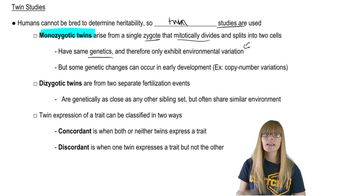
In mammals, identical twins arise when an embryo derived from a single fertilized egg splits into two independent embryos, producing two genetically identical individuals.
The converse phenotype, fusion of two genetically distinct embryos into a single individual, is also known. What are the genetic implications of such an event?

Verified step by step guidance
1
Understand the concept of identical twins: Identical twins arise from a single fertilized egg (zygote) that splits into two embryos. These embryos are genetically identical because they originate from the same zygote, which contains the same set of chromosomes from the sperm and egg.
Define the converse phenomenon: The fusion of two genetically distinct embryos into a single individual is known as chimerism. This occurs when two separate zygotes (each with its own unique genetic material) merge during early development to form one organism.
Analyze the genetic implications: A chimera will have cells with two distinct sets of DNA. Some cells will carry the genetic material from one zygote, while others will carry the genetic material from the second zygote. This results in a mosaic of two different genotypes within the same individual.
Consider phenotypic effects: Depending on the distribution of the two cell lineages, the individual may exhibit physical or physiological traits from both genetic lineages. For example, differences in skin pigmentation or blood type may arise if the two zygotes had distinct traits.
Explore potential complications: Chimerism can complicate genetic testing, organ transplantation, and parentage testing, as the individual may have different genetic profiles in different tissues. This phenomenon highlights the complexity of genetic identity in such cases.

Verified video answer for a similar problem:

This video solution was recommended by our tutors as helpful for the problem above.
Video duration:
1m
Was this helpful?

Key Concepts

Here are the essential concepts you must grasp in order to answer the question correctly.

Identical Twins Formation

Identical twins, or monozygotic twins, form when a single fertilized egg (zygote) undergoes cleavage and splits into two separate embryos. This process results in two individuals who share the same genetic material, leading to identical genotypes and phenotypes. Understanding this mechanism is crucial for exploring genetic similarities and the role of environment in development.
Recommended video:

Genetic Distinctness in Fusion

The fusion of two genetically distinct embryos, known as chimerism, occurs when two separate zygotes merge into one individual. This can lead to a unique genetic makeup, where the individual possesses cells from both embryos, resulting in potential variations in traits and health. This phenomenon raises questions about genetic identity and the implications for inheritance and disease susceptibility.
Recommended video:
Guided course
03:45
Descriptive Genetics

Genetic Implications of Chimerism

Chimerism can have significant genetic implications, including the presence of different alleles in various tissues, which may affect phenotypic expression and immune responses. It challenges traditional notions of genetic inheritance and individuality, as chimeric individuals may exhibit traits from both genetic backgrounds. Understanding these implications is essential for fields like genetics, medicine, and evolutionary biology.
Recommended video:
Guided course
03:45
Descriptive Genetics