Pearson+ LogoPearson+ Logo
Ch. 20 - Population Genetics and Evolution at the Population, Species, and Molecular Levels
Sanders - Genetic Analysis: An Integrated Approach 3rd Edition
Sanders3rd EditionGenetic Analysis: An Integrated ApproachISBN: 9780135564172Not the one you use?Change textbook
Chapter 20, Problem D.7

Carl Linnaeus, the 18th-century botanist who laid the foundation for the modern system of taxonomic nomenclature, placed chimpanzees and humans in the same genus. Discuss the merits of this classification.

Verified step by step guidance
1
Step 1: Understand the basis of taxonomic classification, which groups organisms based on shared characteristics and evolutionary relationships, with genus being a rank that includes species that are closely related.
Step 2: Review the morphological and genetic similarities between humans and chimpanzees, such as DNA sequence similarity (approximately 98-99%), similar anatomical features, and shared behavioral traits.
Step 3: Consider the evolutionary perspective, noting that humans and chimpanzees share a recent common ancestor, which supports grouping them in the same genus from a phylogenetic standpoint.
Step 4: Evaluate the merits of Linnaeus's classification by discussing how placing humans and chimpanzees in the same genus reflects their close evolutionary relationship and helps clarify biological similarities.
Step 5: Reflect on any limitations or controversies of this classification, such as the implications for human uniqueness and the criteria used for defining genera in modern taxonomy.

Verified video answer for a similar problem:

This video solution was recommended by our tutors as helpful for the problem above.
Video duration:
2m
Was this helpful?

Key Concepts

Here are the essential concepts you must grasp in order to answer the question correctly.

Taxonomic Classification and Nomenclature

Taxonomy is the science of naming, defining, and classifying organisms based on shared characteristics. Linnaeus developed a hierarchical system (kingdom, genus, species) that groups organisms by similarities, providing a universal language for biology. Understanding this system is essential to evaluate why humans and chimpanzees might be placed in the same genus.
Recommended video:
Guided course
04:24
Sex Determination

Genus Concept and Criteria

A genus groups species that are closely related and share a recent common ancestor, often exhibiting similar morphology and genetics. The decision to place humans and chimpanzees in the same genus reflects their close evolutionary relationship, which can be assessed through anatomical, genetic, and behavioral similarities.
Recommended video:

Evolutionary Relationships and Phylogenetics

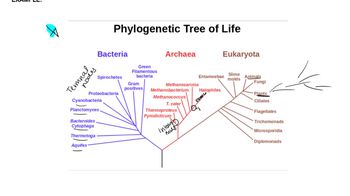
Phylogenetics studies evolutionary relationships using genetic and morphological data to construct family trees. Modern evidence shows humans and chimpanzees share about 98-99% of their DNA, supporting their close kinship. This concept helps justify or critique Linnaeus’s classification based on evolutionary lineage rather than superficial traits.
Recommended video:
Guided course
08:16
Phylogenetic Trees