Pearson+ LogoPearson+ Logo
Ch. 5 - Genetic Linkage and Mapping in Eukaryotes
Sanders - Genetic Analysis: An Integrated Approach 3rd Edition
Sanders3rd EditionGenetic Analysis: An Integrated ApproachISBN: 9780135564172Not the one you use?Change textbook
Chapter 5, Problem 18c

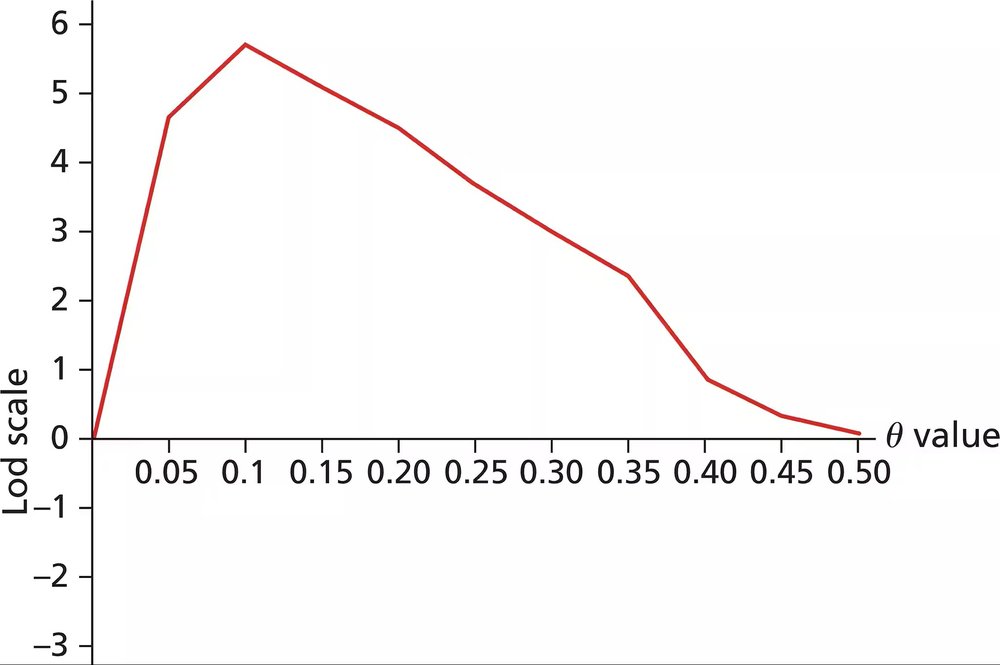
The Rh blood group in humans is determined by a gene on chromosome 1. A dominant allele produces Rh+ blood type, and a recessive allele generates Rh-. Elliptocytosis is an autosomal dominant disorder that produces abnormally shaped red blood cells that have a short life span resulting in hereditary anemia. A large family with elliptocytosis is tested for genetic linkage of Rh blood group and the disease. The lod score data below are obtained for the family.
Graph showing lod scores against theta values, indicating significant genetic linkage at specific theta ranges.
Over what range of θ do lod scores indicate significant evidence in favor of genetic linkage?

Verified step by step guidance
1
Understand the concept of a lod score: A lod score (logarithm of odds) is used in genetics to determine whether two loci are linked. A positive lod score indicates evidence of linkage, while a negative score suggests no linkage.
Recall the threshold for significant evidence of linkage: A lod score of 3 or higher is considered significant evidence in favor of genetic linkage, while a score of -2 or lower suggests no linkage.
Examine the range of recombination frequencies (θ): Lod scores are calculated for different values of θ, which represent the recombination frequency between two loci. θ ranges from 0 (complete linkage) to 0.5 (independent assortment).
Identify the range of θ where lod scores are ≥ 3: Look at the provided lod score data and determine the values of θ for which the lod score is 3 or higher. This range indicates significant evidence of genetic linkage.
Summarize the findings: Based on the data, specify the range of θ values that support genetic linkage, ensuring clarity in the interpretation of the lod score results.

Verified video answer for a similar problem:

This video solution was recommended by our tutors as helpful for the problem above.
Video duration:
2m
Was this helpful?

Key Concepts

Here are the essential concepts you must grasp in order to answer the question correctly.

Genetic Linkage

Genetic linkage refers to the tendency of genes located close to each other on a chromosome to be inherited together during meiosis. This phenomenon occurs because linked genes are less likely to be separated by recombination. Understanding genetic linkage is crucial for mapping traits and diseases, as it helps determine whether two traits are inherited together more often than expected by chance.
Recommended video:
Guided course
07:33
Chi Square and Linkage

Lod Score

A lod score (logarithm of the odds) is a statistical measure used to evaluate the likelihood of genetic linkage between a trait and a specific genetic marker. A lod score greater than 3 is typically considered significant evidence for linkage, while a score less than -2 suggests no linkage. This score helps researchers assess the probability that observed data could occur under the hypothesis of linkage versus no linkage.
Recommended video:
Guided course
04:06
Formation of Plant Gametes

Autosomal Dominant Inheritance

Autosomal dominant inheritance is a pattern where only one copy of a dominant allele is needed for an individual to express a trait or disorder. This means that an affected individual has a 50% chance of passing the trait to each offspring. Understanding this inheritance pattern is essential for predicting the likelihood of disorders, such as elliptocytosis, being passed through generations in a family.
Recommended video:
Guided course
04:37
Variations on Dominance
Related Practice
Textbook Question

The table given here lists the arrangement of alleles of linked genes in dihybrid organisms, the recombination frequency between the genes, and specific gamete genotypes. Using the information provided, determine the expected frequency of the listed gametes. Assume one map unit equals 1% recombination and, when three genes are involved, interference is zero.

597
views
Textbook Question

The Rh blood group in humans is determined by a gene on chromosome 1. A dominant allele produces Rh+ blood type, and a recessive allele generates Rh-. Elliptocytosis is an autosomal dominant disorder that produces abnormally shaped red blood cells that have a short life span resulting in hereditary anemia. A large family with elliptocytosis is tested for genetic linkage of Rh blood group and the disease. The lod score data below are obtained for the family.

From these data, can you conclude that Rh and elliptocytosis loci are genetically linked in this family? Why or why not?

594
views
Textbook Question

The Rh blood group in humans is determined by a gene on chromosome 1. A dominant allele produces Rh+ blood type, and a recessive allele generates Rh-. Elliptocytosis is an autosomal dominant disorder that produces abnormally shaped red blood cells that have a short life span resulting in hereditary anemia. A large family with elliptocytosis is tested for genetic linkage of Rh blood group and the disease. The lod score data below are obtained for the family.

What is Zₘₐₓ for this family? 

564
views
Textbook Question

Genetic linkage mapping for a large number of families identifies 4% recombination between the genes for Rh blood type and elliptocytosis (see Problem 18). At the Rh locus, alleles R and r control Rh+ and Rh- blood types. Allele E producing elliptocytosis is dominant to the wild-type recessive allele e. Tom and Terri each have elliptocytosis, and each is . Tom's mother has elliptocytosis and is Rh- while his father is healthy and has Rh+. Terri's father is Rh+ and has elliptocytosis; Terri's mother is Rh- and is healthy.


What is the probability that the first child of Tom and Terri will be Rh− and have elliptocytosis?

749
views
Textbook Question

Genetic linkage mapping for a large number of families identifies 4% recombination between the genes for Rh blood type and elliptocytosis (see Problem 18). At the Rh locus, alleles R and r control Rh+ and Rh- blood types. Allele E producing elliptocytosis is dominant to the wild-type recessive allele e. Tom and Terri each have elliptocytosis, and each is . Tom's mother has elliptocytosis and is Rh- while his father is healthy and has Rh+. Terri's father is Rh+ and has elliptocytosis; Terri's mother is Rh- and is healthy.


What is the probability that a child of Tom and Terri who is Rh+ will have elliptocytosis?

747
views
Textbook Question

A group of families in which an autosomal dominant condition is present are studied to determine lod scores for possible genetic linkage between three RFLP markers (R1, R2, and R3) and the disease gene. The chart shows lod scores at each of the recombination distances (θ values) tested. Provide an interpretation of the lod score results for each RFLP. Be specific about any significant evidence of genetic linkage.

440
views