A DNA sequence encoding a five-amino acid polypeptide is given below.
...ACGGCAAGATCCCACCCTAATCAGACCGTACCATTCACCTCCT...
...TGCCGTTCTAGGGTGGGATTAGTCTGGCATGGTAAGTGGAGGA...
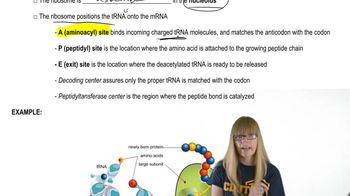
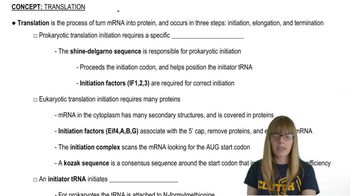
What is the function of the Shine–Dalgarno sequence?

Verified step by step guidance
A DNA sequence encoding a five-amino acid polypeptide is given below.
...ACGGCAAGATCCCACCCTAATCAGACCGTACCATTCACCTCCT...
...TGCCGTTCTAGGGTGGGATTAGTCTGGCATGGTAAGTGGAGGA...
What is the function of the Shine–Dalgarno sequence?
A portion of the coding strand of DNA for a gene has the sequence
5′-...GGAGAGAATGAATCT...-3′
Write out the template DNA strand sequence and polarity as well as the mRNA sequence and polarity for this gene segment.
A portion of the coding strand of DNA for a gene has the sequence
5′-...GGAGAGAATGAATCT...-3′
Assuming the mRNA is in the correct reading frame, write the amino acid sequence of the polypeptide using three-letter abbreviations and, separately, the amino acid sequence using one-letter abbreviations.
A eukaryotic mRNA has the following sequence. The 5' cap is indicated in italics (CAP), and the 3' poly(A) tail is indicated by italicized adenines.
5′-CAPCCAAGCGUUACAUGUAUGGAGAGAAUGAAACUGAGGCUUGCCACGUUUGUUAAGCACCUAUGCUACCGAAAAAAAAAAAAAAAAAAAAAAAA-3′
Determine the amino acid sequence of the polypeptide produced from this mRNA. Write the sequence using the three-letter and one-letter abbreviations for amino acids.
Diagram a eukaryotic gene containing three exons and two introns, the pre-mRNA and mature mRNA transcript of the gene, and a partial polypeptide that contains the following sequences and features. Carefully align the nucleic acids, and locate each sequence or feature on the appropriate molecule.
a. The AG and GU dinucleotides corresponding to intron-exon junctions
b. The +1 nucleotide
c. The 5' UTR and the 3' UTR
d. The start codon sequence
e. A stop codon sequence
f. A codon sequence for the amino acids Gly-His-Arg at the end of exon 1 and a codon sequence for the amino acids Leu-Trp-Ala at the beginning of exon 2
Table C contains DNA-sequence information compiled by Marilyn Kozak (1987). The data consist of the percentage of A, C, G, and T at each position among the 12 nucleotides preceding the start codon in 699 genes from various vertebrate species and at the first nucleotide after the start codon. (The start codon occupies positions +1 to +3 and the first nucleotide immediately after the start codon occupies position +4) Use the data to determine the consensus sequence for the 13 nucleotides ( -12 to -1 and +4) surrounding the start codon in vertebrate genes.