Pearson+ LogoPearson+ Logo
Ch. 9 - The Molecular Biology of Translation
Sanders - Genetic Analysis: An Integrated Approach 3rd Edition
Sanders3rd EditionGenetic Analysis: An Integrated ApproachISBN: 9780135564172Not the one you use?Change textbook
Chapter 9, Problem 39c

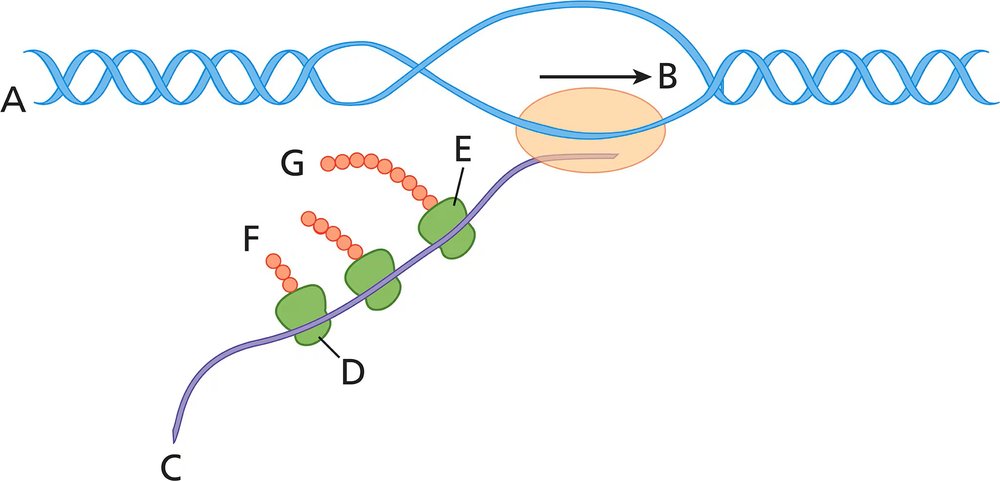
Answer the following questions about the accompanying diagram.
Diagram illustrating DNA transcription with labeled structures A, B, C, D, E, F, and G.
What structure is closest to B?

Verified step by step guidance
1
Examine the accompanying diagram carefully to identify the labeled structure 'B' and its surrounding structures.
Determine the biological context of the diagram (e.g., is it a chromosome, a cell, or an organelle?) to narrow down the possible structures.
Identify the structure closest to 'B' by analyzing the spatial relationships and labels provided in the diagram.
Use your knowledge of genetics and cell biology to confirm the identity of the structure closest to 'B' based on its location and function.
If the diagram includes a legend or key, cross-reference the labels to ensure the correct identification of the structure closest to 'B'.

Verified video answer for a similar problem:

This video solution was recommended by our tutors as helpful for the problem above.
Video duration:
2m
Was this helpful?

Key Concepts

Here are the essential concepts you must grasp in order to answer the question correctly.

Cell Structure

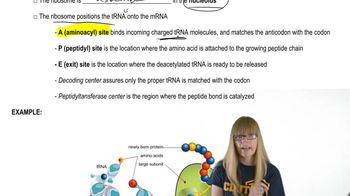
Understanding cell structure is fundamental in genetics, as it provides insight into the organization and function of various cellular components. Key structures include the nucleus, which houses genetic material, and organelles like mitochondria and ribosomes, which play roles in energy production and protein synthesis, respectively. Recognizing these structures helps in identifying their relationships and functions in the context of genetic processes.
Recommended video:
Guided course
03:49
Ribosome Structure

Genetic Material

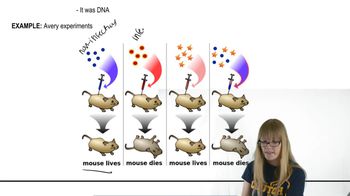
Genetic material, primarily DNA, carries the instructions for the development, functioning, and reproduction of all living organisms. In the context of a diagram, identifying the location of genetic material can clarify how traits are inherited and expressed. Understanding the structure of DNA, including its double helix formation and base pairing, is crucial for interpreting genetic information.
Recommended video:
Guided course
09:32
History and Experiments

Diagram Interpretation

Diagram interpretation involves analyzing visual representations of biological concepts to extract meaningful information. This skill is essential in genetics, as diagrams often illustrate complex processes like cell division, gene expression, or metabolic pathways. Being able to identify structures and their relationships in a diagram enhances comprehension of genetic mechanisms and their implications in biology.
Recommended video:
Guided course
06:28
Branch Diagram