Pearson+ LogoPearson+ Logo
Ch.15 Aldehydes and Ketones
McMurry - Fundamentals of GOB 8th Edition
McMurry8th EditionFundamentals of GOBISBN: 9780134015187Not the one you use?Change textbook
Chapter 15, Problem 39a

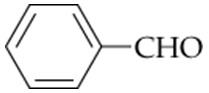
Draw the structures of the products formed when the following compounds react with a reducing agent.
a.

Verified step by step guidance
1
Identify the functional groups present in the given compounds. Common functional groups that react with reducing agents include aldehydes, ketones, carboxylic acids, and esters.
Determine the type of reducing agent being used (e.g., NaBH₄ or LiAlH₄). NaBH₄ typically reduces aldehydes and ketones, while LiAlH₄ can reduce a wider range of functional groups, including carboxylic acids and esters.
For each functional group, predict the product of the reduction reaction. For example, aldehydes are reduced to primary alcohols, ketones to secondary alcohols, carboxylic acids to primary alcohols, and esters to a combination of alcohols.
Draw the structure of the reduced product for each compound. Replace the oxygen-containing functional group with the appropriate alcohol group based on the reduction reaction.
Ensure that the molecular structure of the product is complete, with all bonds and atoms correctly represented, and verify that the reaction adheres to the rules of organic chemistry.

Verified video answer for a similar problem:

This video solution was recommended by our tutors as helpful for the problem above.
Was this helpful?

Key Concepts

Here are the essential concepts you must grasp in order to answer the question correctly.

Reducing Agents

Reducing agents are substances that donate electrons in a chemical reaction, leading to the reduction of another species. They typically contain elements in a lower oxidation state and can facilitate the conversion of functional groups, such as carbonyls to alcohols. Understanding the nature of the reducing agent is crucial for predicting the products of the reaction.
Recommended video:
Guided course
1:03
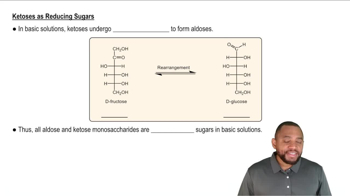
Ketoses as Reducing Sugars Concept 2

Organic Reaction Mechanisms

Organic reaction mechanisms describe the step-by-step process by which reactants transform into products. This includes the movement of electrons, formation and breaking of bonds, and the intermediates formed during the reaction. Familiarity with these mechanisms helps in visualizing how the structures of the reactants change to yield the final products.
Recommended video:
Guided course
2:26
Introduction to Organic Chemistry Concept 1

Functional Groups

Functional groups are specific groups of atoms within molecules that are responsible for the characteristic chemical reactions of those molecules. Identifying the functional groups present in the reactants is essential for predicting the outcome of the reaction with a reducing agent, as different groups react differently under reduction conditions.
Recommended video:
Guided course
1:11
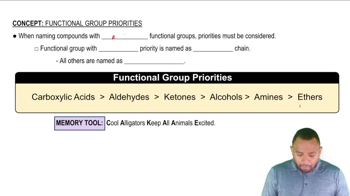
Functional Group Priorities Concept 1