Pearson+ LogoPearson+ Logo
Ch.17 Carboxylic Acids and Their Derivatives
McMurry - Fundamentals of GOB 8th Edition
McMurry8th EditionFundamentals of GOBISBN: 9780134015187Not the one you use?Change textbook
Chapter 17, Problem 42d

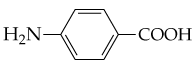
Give systematic names for the following carboxylic acids:
d.

Verified step by step guidance
1
Identify the parent chain: Locate the longest continuous carbon chain that includes the carboxylic acid group (-COOH). The carboxylic acid group will always be at position 1, so no numbering is needed for its position.
Determine the root name: The root name is based on the number of carbons in the parent chain. Use the appropriate alkane name (e.g., methane, ethane, propane) and replace the '-e' ending with '-oic acid' to indicate the presence of the carboxylic acid group.
Identify and name substituents: Look for any alkyl or other substituent groups attached to the parent chain. Assign numbers to the substituents based on their position on the chain, starting from the carboxylic acid carbon as position 1.
Combine the substituent names and parent chain name: Write the substituents in alphabetical order, followed by the parent chain name with the '-oic acid' suffix. Use hyphens to separate numbers from words and commas to separate multiple numbers.
Double-check for special cases: If the compound contains additional functional groups or multiple carboxylic acid groups, adjust the naming accordingly (e.g., use 'dicarboxylic acid' for two -COOH groups).

Verified video answer for a similar problem:

This video solution was recommended by our tutors as helpful for the problem above.
Was this helpful?

Key Concepts

Here are the essential concepts you must grasp in order to answer the question correctly.

Carboxylic Acids

Carboxylic acids are organic compounds characterized by the presence of one or more carboxyl groups (-COOH). They are known for their acidic properties due to the ability of the carboxyl group to donate a proton (H+). Common examples include acetic acid and citric acid, which are widely used in food and industry.
Recommended video:
Guided course
1:09
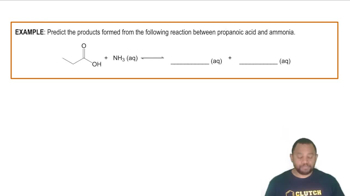
Carboxylic Acid Reactions Example 1

Systematic Naming

Systematic naming, or IUPAC nomenclature, is a standardized method for naming chemical compounds. For carboxylic acids, the name is derived from the longest carbon chain containing the carboxyl group, with the suffix '-oic acid' added. This systematic approach ensures that each compound has a unique and descriptive name based on its structure.
Recommended video:
Guided course
0:38
Systematic Naming Concept 2

Functional Groups

Functional groups are specific groups of atoms within molecules that are responsible for the characteristic chemical reactions of those molecules. In carboxylic acids, the carboxyl group (-COOH) is the functional group that defines their properties and reactivity. Understanding functional groups is essential for predicting the behavior of organic compounds in chemical reactions.
Recommended video:
Guided course
1:11
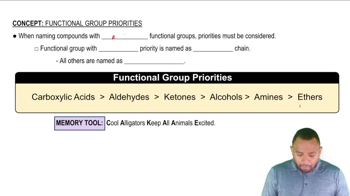
Functional Group Priorities Concept 1