Pearson+ LogoPearson+ Logo
Ch.24 Lipid Metabolism
McMurry - Fundamentals of GOB 8th Edition
McMurry8th EditionFundamentals of GOBISBN: 9780134015187Not the one you use?Change textbook
Chapter 24, Problem 26

What is the origin of the triacylglycerols transported by very low-density lipoproteins?

Verified step by step guidance
1
Understand the role of very low-density lipoproteins (VLDLs): VLDLs are lipoproteins synthesized in the liver that transport lipids, including triacylglycerols, to tissues throughout the body.
Recognize the origin of triacylglycerols: Triacylglycerols transported by VLDLs are primarily synthesized in the liver. They are formed from fatty acids and glycerol through a process called lipogenesis.
Identify the sources of fatty acids: Fatty acids used in the synthesis of triacylglycerols can originate from dietary fats absorbed in the intestines or from the breakdown of stored fats (adipose tissue) in the body.
Understand the assembly of VLDLs: Once triacylglycerols are synthesized in the liver, they are packaged with cholesterol, phospholipids, and apolipoproteins to form VLDLs, which are then released into the bloodstream.
Connect the function of VLDLs to metabolism: VLDLs deliver triacylglycerols to tissues, where they are broken down by lipoprotein lipase into free fatty acids and glycerol for energy production or storage.

Verified video answer for a similar problem:

This video solution was recommended by our tutors as helpful for the problem above.
Video duration:
3m
Was this helpful?

Key Concepts

Here are the essential concepts you must grasp in order to answer the question correctly.

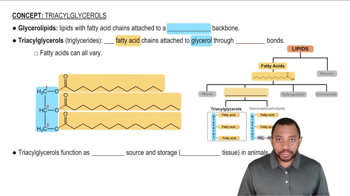
Triacylglycerols (TAGs)

Triacylglycerols, also known as triglycerides, are a type of fat found in the body and are composed of three fatty acid molecules esterified to a glycerol backbone. They serve as a major form of energy storage and are transported in the bloodstream by lipoproteins. Understanding their structure and function is essential for grasping their role in metabolism and health.
Recommended video:
Guided course
1:52
Triacylglycerols Concept 1

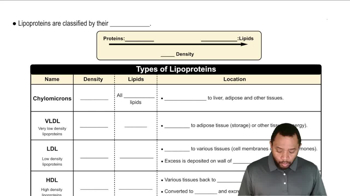
Very Low-Density Lipoproteins (VLDL)

Very Low-Density Lipoproteins are a class of lipoproteins that transport lipids, primarily triacylglycerols, from the liver to peripheral tissues. VLDL is synthesized in the liver and plays a crucial role in lipid metabolism. It is important to understand how VLDL functions in the body to comprehend the transport and distribution of fats.
Recommended video:
Guided course
3:52
Lipoproteins for Transport Concept 2

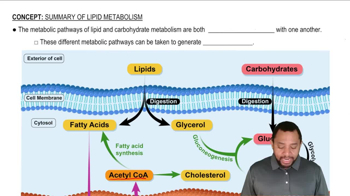
Lipid Metabolism

Lipid metabolism refers to the biochemical processes involved in the synthesis and degradation of lipids in the body. This includes the formation of triacylglycerols, their storage, and their mobilization for energy. A solid understanding of lipid metabolism is necessary to explain the origin of triacylglycerols in VLDL and their role in overall metabolic health.
Recommended video:
Guided course
5:50
Summary of Lipid Metabolism Concept 1