Pearson+ LogoPearson+ Logo
Ch.25 Protein and Amino Acid Metabolism
McMurry - Fundamentals of GOB 8th Edition
McMurry8th EditionFundamentals of GOBISBN: 9780134015187Not the one you use?Change textbook
Chapter 25, Problem 37

If you were diagnosed as having a diet low in lysine, what foods might you include in your diet to alleviate this problem?

Verified step by step guidance
1
Understand that lysine is an essential amino acid, meaning the body cannot produce it and it must be obtained through the diet.
Research and identify foods that are rich in lysine. Common sources include high-protein foods such as meat (e.g., chicken, beef, pork), fish, eggs, and dairy products (e.g., milk, cheese, yogurt).
For plant-based options, consider legumes (e.g., lentils, chickpeas, black beans), soy products (e.g., tofu, tempeh, soy milk), and certain seeds (e.g., pumpkin seeds, quinoa).
Incorporate these lysine-rich foods into your daily meals. For example, you could add lentils to soups, include chicken or fish in your main dishes, or snack on yogurt and seeds.
Monitor your dietary intake to ensure you are meeting the recommended daily allowance for lysine, which varies based on age, gender, and activity level. Consult a nutritionist or healthcare provider if needed for personalized advice.

Verified video answer for a similar problem:

This video solution was recommended by our tutors as helpful for the problem above.
Video duration:
3m
Was this helpful?

Key Concepts

Here are the essential concepts you must grasp in order to answer the question correctly.

Lysine

Lysine is an essential amino acid that the body cannot synthesize and must be obtained through diet. It plays a crucial role in protein synthesis, hormone production, and calcium absorption. Foods rich in lysine include meat, fish, dairy products, and certain plant-based sources like legumes and quinoa.
Recommended video:
Guided course
3:24
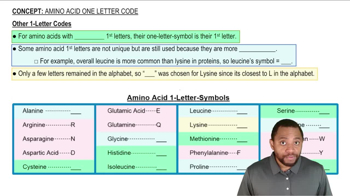
Other 1-Letter Codes Concept 2

Protein Sources

Understanding protein sources is vital for addressing lysine deficiency. Animal proteins, such as chicken, beef, and eggs, are typically high in lysine. Plant-based sources, while often lower in lysine, can be combined (e.g., beans with rice) to create a complete amino acid profile, ensuring adequate lysine intake.
Recommended video:
Guided course
2:01
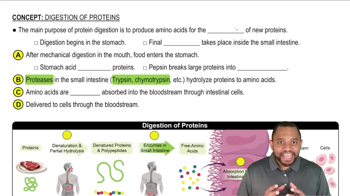
Digestion of Proteins Concept 1

Dietary Adjustments

Making dietary adjustments involves incorporating foods that are high in lysine to correct deficiencies. This may include increasing the intake of lysine-rich foods and possibly reducing reliance on low-lysine foods, such as certain grains and nuts, to achieve a balanced diet that meets nutritional needs.
Recommended video:
Guided course
1:27
Lipoproteins for Transport Example 1