뒤로
뒤로
문제 52d
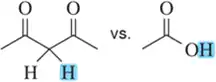
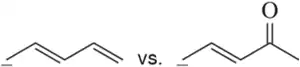
Identify the most acidic proton in each pair. Tell which structural features you analyzed and why you weighted them as you did in picking one answer. [Always start by drawing the conjugate base.]
(d)
문제 52h
Identify the most acidic proton in each pair. Tell which structural features you analyzed and why you weighted them as you did in picking one answer. [Always start by drawing the conjugate base.]
(h)
문제 53
The nitrogen screened in purple in Figure 4.43 is not protonated at physiological pH. Why?
<IMAGE>
문제 54c
Identify the Lewis acid and the Lewis base in each of the following reactions.
(c)
문제 55a
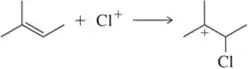
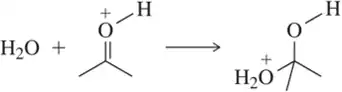
Identify the nucleophile and the electrophile in each of the following reactions.
(a)
문제 55b
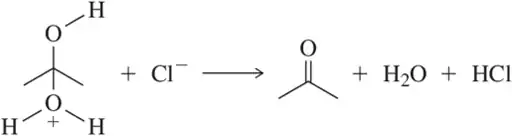
Identify the nucleophile and the electrophile in each of the following reactions.
(b)
문제 56a
Show an arrow-pushing mechanism that forms the product on the right from the reactant at left. Only one arrow is necessary in each reaction. [Don't forget to draw in the lone pairs on this and the next two assessments.]
(a)
문제 56d
Show an arrow-pushing mechanism that forms the product on the right from the reactant at left. Only one arrow is necessary in each reaction. [Don't forget to draw in the lone pairs on this and the next two assessments.]
(d)
문제 57a
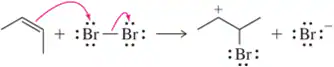
Show an arrow-pushing mechanism that forms the product on the right from the reactant at left. Two arrows are necessary in each reaction.
(a)
문제 57b
Show an arrow-pushing mechanism that forms the product on the right from the reactant at left. Two arrows are necessary in each reaction.
(b)
문제 58a
Show an arrow-pushing mechanism that forms the product on the right from the reactant at left. Here, three arrows are necessary in each reaction.
(a)
문제 59c
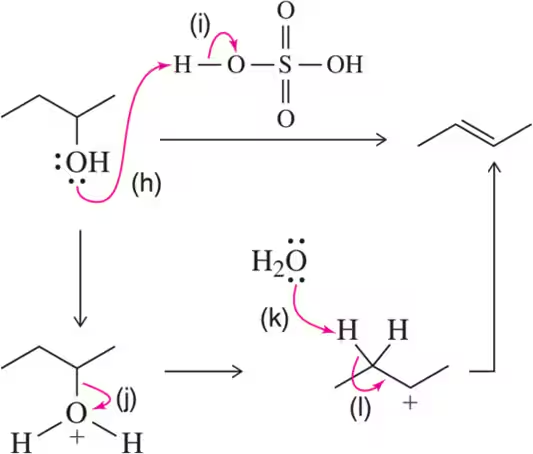
Identify the arrow types that are shown in each of these arrow-pushing mechanisms.
(iii)
문제 59d
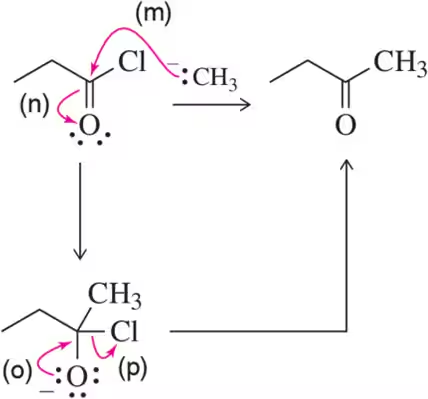
Identify the arrow types that are shown in each of these arrow-pushing mechanisms.
(iv)
문제 60a
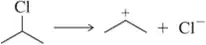
Identify the arrows shown by type and predict the product that should result.
(a)
문제 60e
Identify the arrows shown by type and predict the product that should result.
(e)
문제 61c
Would you expect the following species to be electrophiles or nucleophiles? Some may be both. Explain your answer.
(c)
문제 61e
Would you expect the following species to be electrophiles or nucleophiles? Some may be both. Explain your answer.
(e)
문제 61h
Would you expect the following species to be electrophiles or nucleophiles? Some may be both. Explain your answer.
(h)
문제 62b(i,ii)
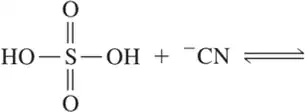
For the following acid–base pairs,
(i) complete the reaction;
(ii) identify the acid (A), base (B), conjugate acid (CA), and conjugate base (CB);
(b)
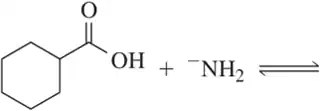
문제 62c(i,ii)
For the following acid–base pairs,
(i) complete the reaction;
(ii) identify the acid (A), base (B), conjugate acid (CA), and conjugate base (CB);
(c)
문제 62e(vi)
For the following acid–base pairs, (vi) draw a reaction coordinate diagram.
(e)
문제 62e(iii)
For the following acid–base pairs, (iii) predict the favored side of equilibrium;
(e)
문제 62e(iv)
For the following acid–base pairs, (iv) calculate Keq;
(e)
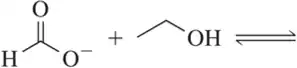
문제 62e(i,ii)
For the following acid–base pairs,
(i) complete the reaction;
(ii) identify the acid (A), base (B), conjugate acid (CA), and conjugate base (CB);
(e)
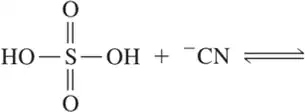
문제 62f(i,ii)
For the following acid–base pairs, (i) complete the reaction; (ii) identify the acid (A), base (B), conjugate acid (CA), and conjugate base (CB);
(f)
문제 62f(v, vi)
For the following acid–base pairs, (v) show a mechanism for the reaction; and (vi) draw a reaction coordinate diagram.
(f)
문제 62f(iii,iv)
For the following acid–base pairs, (iii) predict the favored side of equilibrium; (iv) calculate ;
(f)
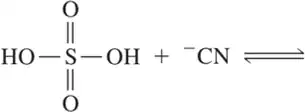
문제 62h(iii, iv)
For the following acid–base pairs, (iii) predict the favored side of equilibrium; (iv) calculate Keq;
(h)
문제 63a
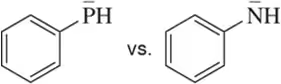
Identify the stronger base in each pair. Explain your choice. Citing pKa values is not an acceptable answer.
(a)
문제 63c
Identify the stronger base in each pair. Explain your choice. Citing pKa values is not an acceptable answer.
(c)