뒤로
뒤로
문제 36b
Using qualitative reasoning for the acid–base reactions shown,
(i) which is stronger, the acid or the conjugate acid?
(ii) Which side of the reaction is favored?
(iii) Would you expect a Keq greater than, equal to, or less than 1?
(b)
문제 37a
Using qualitative reasoning for the acid–base reactions shown,
(i) which is stronger, the base or the conjugate base?
(ii) Which side of the reaction is favored?
(iii) Would you expect a Keq greater than or less than 1?
(a)
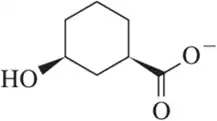
문제 37c
Using qualitative reasoning for the acid–base reactions shown,
(i) which is stronger, the base or the conjugate base?
(ii) Which side of the reaction is favored?
(iii) Would you expect a Keq greater than or less than 1?
(c)
문제 38c
Calculate Keq for these acid–base reactions.
(c)
문제 38d
Calculate Keq for these acid–base reactions.
(d)
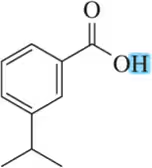
문제 39b
For each indicated proton, suggest an approximate pKa value from Table 4.5. Rationalize your choice.
(b)
문제 39d
For each indicated proton, suggest an approximate pKa value from Table 4.5. Rationalize your choice.
(d)
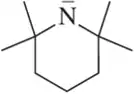
문제 40b
For the bases shown, draw the conjugate acid and identify a pKa value from Table 4.5 that would help you accurately estimate its stability.
(b)
문제 40c
For the bases shown, draw the conjugate acid and identify a pKa value from Table 4.5 that would help you accurately estimate its stability.
(c)
문제 40d
For the bases shown, draw the conjugate acid and identify a pKa value from Table 4.5 that would help you accurately estimate its stability.
(d)
문제 40e
For the bases shown, draw the conjugate acid and identify a pKa value from Table 4.5 that would help you accurately estimate its stability.
(e)
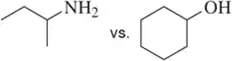
문제 41a
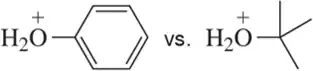
Without using pKa values, pick out the more acidic compound in each pair. Explain your answer.
(a)
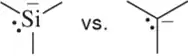
문제 42a
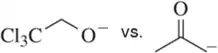
Without using pKa values, pick out the more reactive (least stable) base in each pair. Explain your answer.
(a)
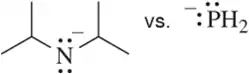
문제 44a
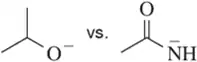
Without using pKa values, pick out the least reactive (most stable) base in each pair. Explain your answer.
(a)
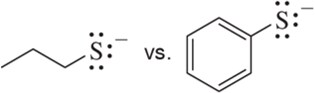
문제 44b
Without using pKa values, pick out the least reactive (most stable) base in each pair. Explain your answer.
(b)
문제 44c
Without using pKa values, pick out the least reactive (most stable) base in each pair. Explain your answer.
(c)
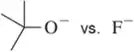
문제 45a
Which anion in each pair would you expect to react more quickly with H+?
(a)
문제 45b
Which anion in each pair would you expect to react more quickly with H+?
(b)
문제 46a
Which acid in each pair would you expect to more readily donate a proton to a basic compound?
(a)
문제 46b
Which acid in each pair would you expect to more readily donate a proton to a basic compound?
(b)
문제 47
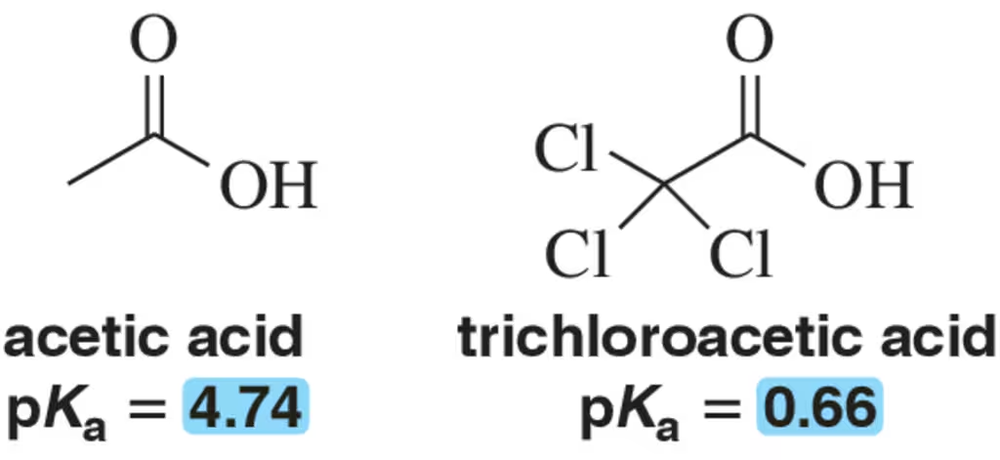
Rationalize the rather large difference in pKa values for the two carboxylic acids shown.
문제 48
Rank the following alcohols in order of descending pKa value. Explain your ranking.
문제 49
Rank the following amines in order of their basicity (strongest base = 1 ; weakest base = 6).
문제 50
If reacted with a strong base, which of the labeled protons would you expect to be removed first?
문제 51a
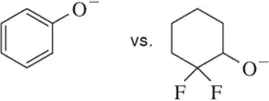
Identify the most stable conjugate base in each pair. Tell which structural features you analyzed and why you weighted them as you did in picking one answer.
(a)
문제 51c
Identify the most stable conjugate base in each pair. Tell which structural features you analyzed and why you weighted them as you did in picking one answer.
(c)
문제 51e
Identify the most stable conjugate base in each pair. Tell which structural features you analyzed and why you weighted them as you did in picking one answer.
(e)
문제 51f
Identify the most stable conjugate base in each pair. Tell which structural features you analyzed and why you weighted them as you did in picking one answer.
(f)
문제 52a
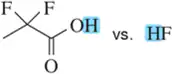
Identify the most acidic proton in each pair. Tell which structural features you analyzed and why you weighted them as you did in picking one answer. [Always start by drawing the conjugate base.]
(a)
문제 52b
Identify the most acidic proton in each pair. Tell which structural features you analyzed and why you weighted them as you did in picking one answer. [Always start by drawing the conjugate base.]
(b)