Textbook Question
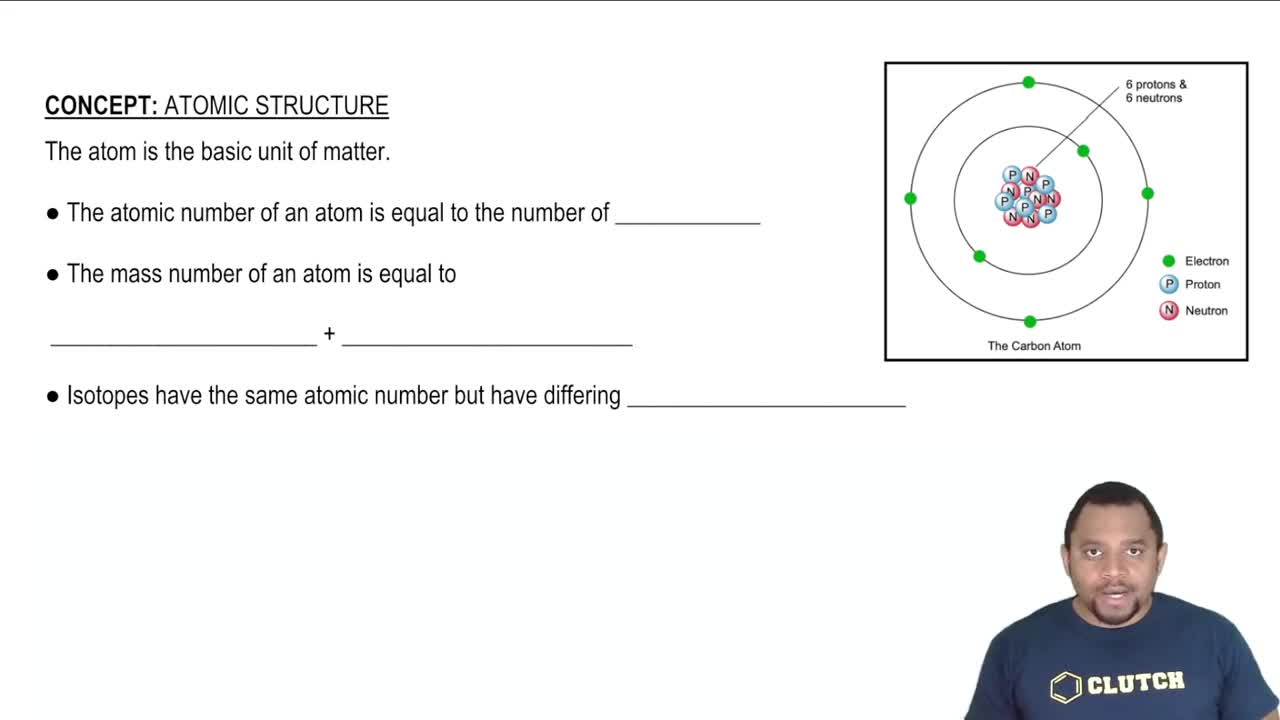
How many electrons does an atom of each of the following elements need to lose to achieve a noble gas configuration? By losing that many electrons, which noble gas configuration is achieved?
(b) Aluminum
604
views

 Mullins 1st EditionCh. 2 - General Chemistry Translated: Finding the ElectronsProblem 13d
 Verified step by step guidance
 01:44
01:44
 03:43
03:43 06:56
06:56How many electrons does an atom of each of the following elements need to lose to achieve a noble gas configuration? By losing that many electrons, which noble gas configuration is achieved?
(b) Aluminum
Choose the larger atom in each pair.
(b) O or F
How many electrons does an atom of each of the following elements need to lose to achieve a noble gas configuration? By losing that many electrons, which noble gas configuration is achieved?
(c) Magnesium
Would you expect electrons in the 2s or 3s orbital to be more reactive? Why?
How many electrons does an atom of each of the following elements need to lose to achieve a noble gas configuration? By losing that many electrons, which noble gas configuration is achieved?
(a) Beryllium
A chemistry student drew the following incorrect electron configuration for carbon. (b) Which rule wasn't followed by the student?