
Ch. 15 - Conjugated Systems, Orbital Symmetry, and Ultraviolet Spectroscopy
Wade - Organic Chemistry 9th Edition
Wade9th EditionOrganic ChemistryISBN: 9780135213728Not the one you use?Change textbook
Chapter 15, Problem 40a,b,c

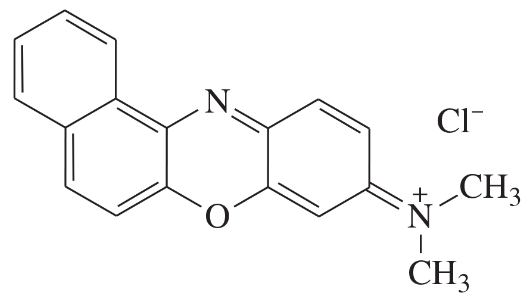
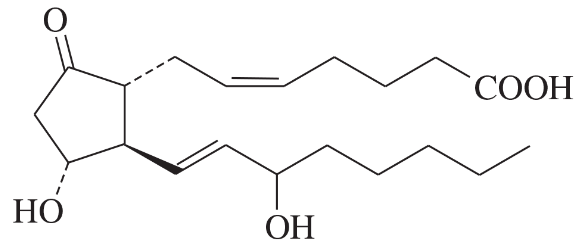
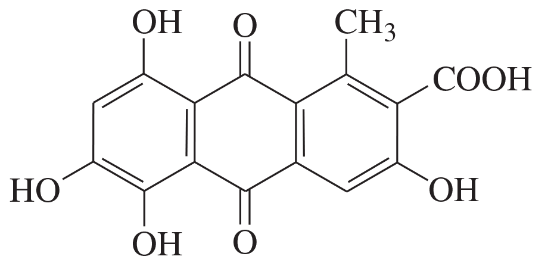
Determine whether each structure is likely to be colored or not. For those that you predict to be colored, indicate the extended conjugation by marking the series of continuous sp2 hybridized atoms.
(a)
(b)
(c)

Verified step by step guidance
1
Step 1: Analyze the structure in (i). The molecule contains an extended conjugated system with alternating double bonds in a fused aromatic ring system. This extended conjugation allows for absorption of visible light, making the molecule likely to be colored. Mark the series of continuous sp2 hybridized atoms in the aromatic rings.
Step 2: Examine the structure in (ii). While there are conjugated double bonds present, the conjugation is not extensive enough to absorb visible light. Molecules with limited conjugation typically absorb in the UV region and are not colored. Conclude that this structure is unlikely to be colored.
Step 3: Evaluate the structure in (iii). The molecule contains a highly conjugated system with alternating double bonds in a fused aromatic ring system. This extended conjugation is sufficient to absorb visible light, making the molecule likely to be colored. Mark the series of continuous sp2 hybridized atoms in the aromatic rings.
Step 4: Highlight the importance of extended conjugation in determining whether a molecule is colored. Extended conjugation lowers the energy gap between the HOMO and LUMO, allowing absorption in the visible spectrum.
Step 5: Summarize the findings: (i) and (iii) are likely to be colored due to their extended conjugation, while (ii) is unlikely to be colored due to insufficient conjugation.

Verified video answer for a similar problem:

This video solution was recommended by our tutors as helpful for the problem above.
Video duration:
2m
Was this helpful?

Key Concepts

Here are the essential concepts you must grasp in order to answer the question correctly.

Conjugation

Conjugation refers to the overlap of p-orbitals across adjacent sp2 hybridized atoms, allowing for delocalization of π electrons. This delocalization stabilizes the molecule and can lead to the absorption of visible light, resulting in color. The presence of extended conjugation typically correlates with a lower energy gap between the ground and excited states, which is crucial for color prediction.
Recommended video:
Guided course
03:27
Conjugated states

Color in Organic Compounds

The color of organic compounds is often determined by their ability to absorb specific wavelengths of light, which is influenced by their electronic structure. Compounds with extensive conjugated systems tend to absorb light in the visible spectrum, leading to the perception of color. The specific color observed is complementary to the wavelength of light absorbed.
Recommended video:
Guided course
01:40
Defining meso compounds.

Hybridization and Molecular Geometry

Hybridization describes the mixing of atomic orbitals to form new hybrid orbitals, which influences the geometry and reactivity of molecules. In the context of color prediction, sp2 hybridization is significant as it allows for the formation of planar structures conducive to effective π overlap. This geometry is essential for establishing conjugated systems that can absorb light.
Recommended video:
Guided course
01:54
Predict the hybridization and molecular geometry
Related Practice
Textbook Question

The pentadienyl radical, H2C=CH–CH=CH–CH2, has its unpaired electron delocalized over three carbon atoms.

h. Add an electron to the pentadienyl radical to give the pentadienyl anion. Which carbon atoms share the negative charge? Does this picture agree with the resonance picture?

1145
views
Textbook Question

A student was studying terpene synthesis, and she wanted to make the compound shown here. First she converted 3-bromo-6-methylcyclohexene to alcohol A. She heated alcohol A with sulfuric acid and purified one of the components (compound B) from the resulting mixture. Compound B has the correct molecular formula for the desired product.

a. Suggest how 3-bromo-6-methylcyclohexene might be converted to alcohol A.

530
views
Textbook Question

Determine whether each structure is likely to be colored or not. For those that you predict to be colored, indicate the extended conjugation by marking the series of continuous sp2 hybridized atoms.

(g)

598
views
Textbook Question

A student was studying terpene synthesis, and she wanted to make the compound shown here. First she converted 3-bromo-6-methylcyclohexene to alcohol A. She heated alcohol A with sulfuric acid and purified one of the components (compound B) from the resulting mixture. Compound B has the correct molecular formula for the desired product.

(c) Propose a mechanism for the dehydration of alcohol A to compound B.

1469
views
Textbook Question

Determine whether each structure is likely to be colored or not. For those that you predict to be colored, indicate the extended conjugation by marking the series of continuous sp2 hybridized atoms.

(h)

560
views
Textbook Question

Determine whether each structure is likely to be colored or not. For those that you predict to be colored, indicate the extended conjugation by marking the series of continuous sp2 hybridized atoms.

(d)

(e)

(f)

1283
views