Ch. 20 - The Organic Chemistry of Carbohydrates
Bruice - Organic Chemistry 8th Edition
Bruice8th EditionOrganic ChemistryISBN: 9780135213711Not the one you use?Change textbook
Chapter 21, Problem 30a

a. Identify the sugars in amygdalin.

Verified step by step guidance
1
Understand the structure of amygdalin: Amygdalin is a glycoside composed of a cyanogenic aglycone (benzaldehyde cyanohydrin) and two sugar units. The sugars are attached to the aglycone via glycosidic bonds.
Break down the glycosidic bonds: Amygdalin contains two sugar units, which can be identified by analyzing the structure of the molecule. These sugars are typically glucose and another sugar.
Identify the first sugar: The first sugar in amygdalin is a β-D-glucose unit. This can be determined by examining the stereochemistry and connectivity of the sugar moiety in the molecule.
Identify the second sugar: The second sugar in amygdalin is a β-D-glucose unit as well. It is connected to the first glucose via a glycosidic bond, forming a disaccharide structure.
Conclude the sugar identification: The sugars in amygdalin are two β-D-glucose units. This conclusion is based on the structural analysis of the molecule and the known composition of amygdalin.

Verified video answer for a similar problem:

This video solution was recommended by our tutors as helpful for the problem above.
Was this helpful?

Key Concepts

Here are the essential concepts you must grasp in order to answer the question correctly.

Amygdalin Structure

Amygdalin is a cyanogenic glycoside composed of a benzene ring, a sugar moiety, and a nitrile group. Understanding its structure is crucial for identifying the specific sugars present. The sugar component is typically a disaccharide, which is essential for the biological activity of amygdalin.
Recommended video:
Guided course
03:04
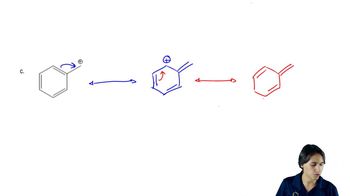
Drawing Resonance Structures

Cyanogenic Glycosides

Cyanogenic glycosides are plant compounds that can release cyanide when hydrolyzed. Amygdalin is one of the most well-known examples, and recognizing its classification helps in understanding its potential toxicity and the sugars involved in its structure. This knowledge is important for studying plant biochemistry and toxicology.
Recommended video:
0:53
Peptide Sequencing: Partial Hydrolysis with Cyanogen Bromide Concept 1

Monosaccharides and Disaccharides

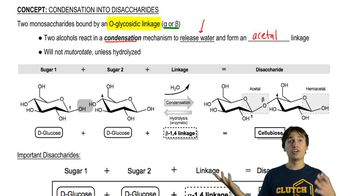
Sugars can be classified as monosaccharides (single sugar units) or disaccharides (two sugar units linked together). In the case of amygdalin, the sugar component is a disaccharide made up of glucose and another sugar, typically mandelonitrile. Familiarity with these classifications aids in identifying the specific sugars present in various compounds.
Recommended video: