Ch. 10 Blood
Marieb - Essentials of Human Anatomy & Physiology 13th Edition
Marieb13th EditionEssentials of Human Anatomy & PhysiologyISBN: 9780135624340Not the one you use?Change textbook
Chapter 10, Problem 15

Define anemia, and give three possible causes.

Verified step by step guidance
1
Anemia is a condition characterized by a deficiency in the number or quality of red blood cells (RBCs) or hemoglobin, which reduces the oxygen-carrying capacity of the blood.
One possible cause of anemia is iron deficiency, which occurs when the body lacks sufficient iron to produce hemoglobin. This can result from inadequate dietary intake, poor absorption, or blood loss.
Another cause is vitamin B12 or folate deficiency, which impairs the production of healthy red blood cells. This type of anemia is often referred to as megaloblastic anemia.
A third cause is chronic diseases, such as kidney disease or autoimmune disorders, which can interfere with the production of erythropoietin (a hormone that stimulates RBC production) or lead to inflammation that affects RBC lifespan.
Other causes include genetic disorders like sickle cell anemia or thalassemia, where the structure or production of hemoglobin is abnormal, leading to reduced oxygen transport.

Verified video answer for a similar problem:

This video solution was recommended by our tutors as helpful for the problem above.
Video duration:
2m
Was this helpful?

Key Concepts

Here are the essential concepts you must grasp in order to answer the question correctly.

Definition of Anemia

Anemia is a medical condition characterized by a deficiency in the number or quality of red blood cells (RBCs) or hemoglobin, which impairs the blood's ability to carry oxygen to tissues. This can lead to symptoms such as fatigue, weakness, and pallor. Understanding anemia's definition is crucial for identifying its causes and implications.
Recommended video:
7:11
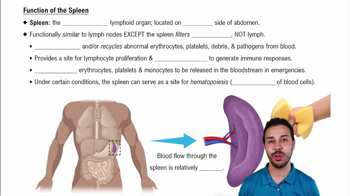
Function of the Spleen

Iron Deficiency

Iron deficiency is one of the most common causes of anemia, resulting from insufficient iron intake, absorption issues, or blood loss. Iron is essential for hemoglobin production, and without adequate iron, the body cannot produce enough healthy red blood cells. This type of anemia is particularly prevalent in women of childbearing age and individuals with poor dietary habits.
Recommended video:
Guided course
4:31
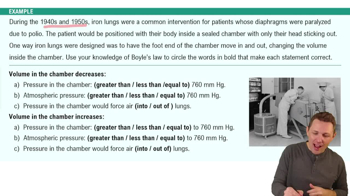
Ventilation Example 1

Chronic Disease Anemia

Chronic disease anemia occurs as a result of long-term medical conditions such as cancer, kidney disease, or inflammatory disorders. These conditions can interfere with the production of red blood cells or lead to their destruction. Understanding this type of anemia is important for recognizing how underlying health issues can contribute to anemia and its management.
Recommended video:
3:09
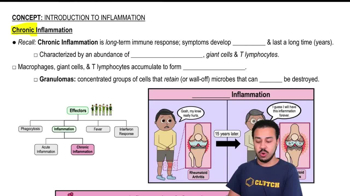
Chronic Inflammation