Pearson+ LogoPearson+ Logo
Ch. 16 - Conserving Biodiversity
Belk, Maier - Biology: Science for Life 6th Edition
Belk, Maier6th EditionBiology: Science for LifeISBN: 9780135214084Not the one you use?Change textbook
Chapter 16, Problem 2

Compare and contrast the species interactions of mutualism, predation, and competition.

Verified step by step guidance
1
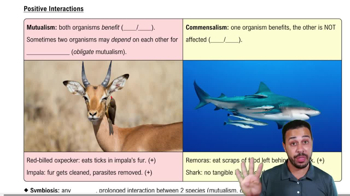
Define mutualism: Mutualism is a type of species interaction where both species involved benefit from the relationship. For example, pollinators like bees and flowering plants exhibit mutualism, as bees get nectar for food while plants benefit from pollination.
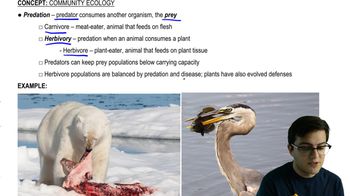
Define predation: Predation is a species interaction where one organism, the predator, hunts and consumes another organism, the prey. This interaction benefits the predator but is harmful to the prey. For example, a lion hunting a zebra is an example of predation.
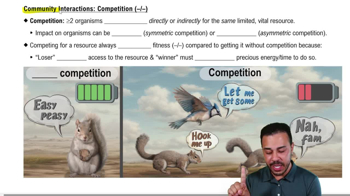
Define competition: Competition occurs when two or more species vie for the same limited resources, such as food, water, or habitat. This interaction is typically harmful to all parties involved because it reduces the availability of resources for each species. For example, two bird species competing for nesting sites in the same area.
Compare mutualism, predation, and competition: Mutualism is unique because both species benefit, whereas predation benefits one species (the predator) at the expense of the other (the prey). Competition differs from both because it negatively impacts all species involved due to resource scarcity.
Contrast the outcomes: Mutualism leads to a positive outcome for both species, predation results in a win-lose scenario, and competition creates a lose-lose situation. These interactions highlight the diverse ways species interact within ecosystems and influence each other's survival and reproduction.

Verified video answer for a similar problem:

This video solution was recommended by our tutors as helpful for the problem above.
Video duration:
2m
Was this helpful?

Key Concepts

Here are the essential concepts you must grasp in order to answer the question correctly.

Mutualism

Mutualism is a type of species interaction where both organisms involved benefit from the relationship. This can occur in various forms, such as pollination, where bees gain nectar while helping plants reproduce. Mutualistic relationships can enhance survival and reproduction for both species, contributing to ecosystem stability.
Recommended video:
Guided course
02:56
Positive Interactions

Predation

Predation is an interaction where one organism, the predator, hunts and consumes another organism, the prey. This relationship is crucial for regulating population sizes and maintaining ecological balance. Predation can drive evolutionary adaptations in both predators and prey, influencing traits such as speed, camouflage, and defensive mechanisms.
Recommended video:

Competition

Competition occurs when two or more species vie for the same limited resources, such as food, space, or mates. This interaction can be intraspecific (within the same species) or interspecific (between different species). Competition can lead to resource partitioning, where species adapt to utilize different resources, thereby reducing direct competition and promoting biodiversity.
Recommended video:
Guided course
02:13
Community Interactions: Competition (-/-)