Pearson+ LogoPearson+ Logo
Ch. 16 - Conserving Biodiversity
Belk, Maier - Biology: Science for Life 6th Edition
Belk, Maier6th EditionBiology: Science for LifeISBN: 9780135214084Not the one you use?Change textbook
Chapter 16, Problem 4

Current rates of species extinction appear to be approximately
a. Equal to
b. 10 times lower than
c. 10 times higher than
d. 50 to 100 times higher than
e. 1000 to 10,000 times higher than

Verified step by step guidance
1
Understand the context of the problem: The question is asking about the comparison between current rates of species extinction and historical (background) rates of extinction. Historical rates refer to the natural rate of species extinction before significant human influence.
Recall the impact of human activities: Human activities such as habitat destruction, pollution, overexploitation, and climate change have significantly accelerated extinction rates. This is a key factor to consider when comparing current and historical rates.
Review scientific estimates: Studies in conservation biology suggest that current extinction rates are much higher than historical rates due to anthropogenic factors. These estimates are often expressed as multiples of the background extinction rate.
Analyze the options provided: The options range from 'equal to' (no difference) to '1000 to 10,000 times higher' (a very significant increase). Consider which option aligns with the scientific consensus on the impact of human activities on extinction rates.
Select the most accurate answer: Based on the scientific understanding of extinction rates, choose the option that best reflects the magnitude of the difference between current and historical rates of extinction.

Verified video answer for a similar problem:

This video solution was recommended by our tutors as helpful for the problem above.
Video duration:
3m
Was this helpful?

Key Concepts

Here are the essential concepts you must grasp in order to answer the question correctly.

Species Extinction Rates

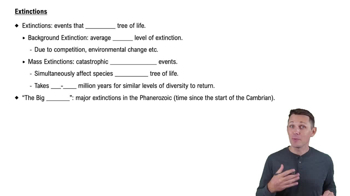
Species extinction rates refer to the frequency at which species disappear from the planet over a specific period. Historically, these rates have been relatively low, with natural extinctions occurring at a rate of about one species per million species per year. However, current extinction rates are significantly influenced by human activities, leading to a dramatic increase in the number of species that are becoming extinct.
Recommended video:
04:48
Extinctions

Background Extinction Rate

The background extinction rate is the standard rate of extinction in Earth's biological history before the significant impact of human activity. This rate serves as a baseline for understanding how current extinction rates compare. It is estimated that the background rate is about 0.1 to 1 species per million species per year, which helps contextualize the alarming rise in extinction rates observed today.
Recommended video:
04:48
Extinctions

Anthropogenic Impact

Anthropogenic impact refers to the effects of human activity on the environment and ecosystems. This includes habitat destruction, pollution, climate change, and overexploitation of resources, all of which contribute to the accelerated rates of species extinction. Understanding this concept is crucial for recognizing the urgency of conservation efforts and the need for sustainable practices to mitigate further loss of biodiversity.
Recommended video:
Guided course
03:35
Geographic Impact on Communities