Pearson+ LogoPearson+ Logo
Ch. 9 - Biology of Wrongful Convictions
Belk, Maier - Biology: Science for Life 6th Edition
Belk, Maier6th EditionBiology: Science for LifeISBN: 9780135214084Not the one you use?Change textbook
Chapter 9, Problem 1

Is a round yellow pea seed (genotype RrYy) an example of polygenic inheritance? Why or why not?

Verified step by step guidance
1
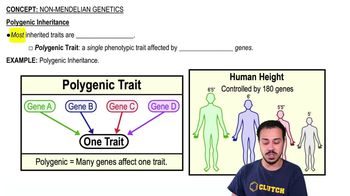
Understand the concept of polygenic inheritance: Polygenic inheritance refers to traits that are controlled by multiple genes, where each gene contributes to the phenotype in a cumulative or additive manner. Examples include human skin color and height.
Analyze the genotype RrYy: This genotype represents two separate genes, R and Y, each with two alleles (R/r and Y/y). The R gene determines the shape of the pea seed (round or wrinkled), and the Y gene determines the color of the pea seed (yellow or green).
Determine if the trait is controlled by multiple genes: In this case, the traits (seed shape and seed color) are controlled by two distinct genes, but they do not interact in a cumulative or additive manner to produce a single phenotype. Instead, each gene independently controls a separate trait.
Compare with polygenic inheritance: Since polygenic inheritance involves multiple genes contributing to a single trait, the genotype RrYy does not fit this definition. The traits controlled by R and Y are independent and do not combine to produce a single phenotype.
Conclude: A round yellow pea seed (genotype RrYy) is not an example of polygenic inheritance because the traits are controlled by two separate genes that independently affect different characteristics (seed shape and seed color), rather than multiple genes contributing to a single trait.

Verified video answer for a similar problem:

This video solution was recommended by our tutors as helpful for the problem above.
Video duration:
2m
Was this helpful?

Key Concepts

Here are the essential concepts you must grasp in order to answer the question correctly.

Polygenic Inheritance

Polygenic inheritance refers to the phenomenon where multiple genes contribute to a single trait, resulting in a continuous range of phenotypes. Traits such as height, skin color, and seed color in plants often exhibit this type of inheritance, as they are influenced by several alleles from different genes.
Recommended video:
Guided course
02:27
Polygenic Inheritance

Genotype and Phenotype

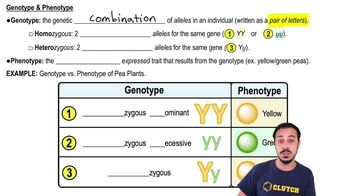
The genotype is the genetic makeup of an organism, represented by the alleles it possesses, while the phenotype is the observable expression of that genotype. In the case of the round yellow pea seed (genotype RrYy), the phenotype is determined by the dominant and recessive alleles for shape (R/r) and color (Y/y).
Recommended video:
Guided course
06:36
Genotype & Phenotype

Mendelian Genetics

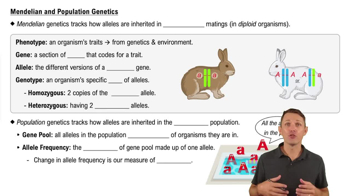
Mendelian genetics is the study of how traits are inherited through the principles established by Gregor Mendel. It includes concepts such as dominant and recessive traits, as well as the segregation and independent assortment of alleles during gamete formation. The round yellow pea seed example illustrates Mendelian inheritance rather than polygenic inheritance.
Recommended video:
04:26
Mendelian and Population Genetics