Which of the following is NOT a cause of cancer?
Table of contents
- 1. Introduction to Genetics51m
- 2. Mendel's Laws of Inheritance3h 37m
- 3. Extensions to Mendelian Inheritance2h 41m
- 4. Genetic Mapping and Linkage2h 28m
- 5. Genetics of Bacteria and Viruses1h 21m
- 6. Chromosomal Variation1h 48m
- 7. DNA and Chromosome Structure56m
- 8. DNA Replication1h 10m
- 9. Mitosis and Meiosis1h 34m
- 10. Transcription1h 0m
- 11. Translation58m
- 12. Gene Regulation in Prokaryotes1h 19m
- 13. Gene Regulation in Eukaryotes44m
- 14. Genetic Control of Development44m
- 15. Genomes and Genomics1h 50m
- 16. Transposable Elements47m
- 17. Mutation, Repair, and Recombination1h 6m
- 18. Molecular Genetic Tools19m
- 19. Cancer Genetics29m
- 20. Quantitative Genetics1h 26m
- 21. Population Genetics50m
- 22. Evolutionary Genetics29m
19. Cancer Genetics
Overview of Cancer
Problem 1b
Textbook Question
How do we know that cancer development requires more than one mutation?
Verified step by step guidance1
Understand that cancer is a complex disease characterized by uncontrolled cell growth, which typically arises from genetic mutations affecting cell cycle regulation.
Recognize that if a single mutation were sufficient to cause cancer, we would expect cancer to develop very rapidly and frequently after just one genetic change.
Examine experimental and epidemiological evidence showing that cancer incidence increases with age and exposure to multiple carcinogens, suggesting accumulation of several mutations over time.
Consider the multi-step model of carcinogenesis, which proposes that multiple mutations in different genes (such as oncogenes and tumor suppressor genes) are necessary to disrupt normal cellular controls and lead to cancer.
Review genetic studies of tumors that identify multiple mutations in various genes within cancer cells, supporting the idea that cancer development requires a series of genetic alterations rather than a single mutation.
Verified video answer for a similar problem:This video solution was recommended by our tutors as helpful for the problem above
Video duration:
1mPlay a video:
Was this helpful?
Key Concepts
Here are the essential concepts you must grasp in order to answer the question correctly.
Multistep Carcinogenesis
Cancer develops through a series of genetic changes rather than a single mutation. This multistep process involves the accumulation of multiple mutations that progressively disrupt normal cell regulation, leading to uncontrolled growth and malignancy.
Oncogenes and Tumor Suppressor Genes
Cancer arises from mutations in oncogenes, which promote cell division, and tumor suppressor genes, which inhibit growth. Both types of genes must be altered to bypass normal cellular controls, indicating that multiple genetic changes are necessary for cancer development.
Recommended video:
Guided course
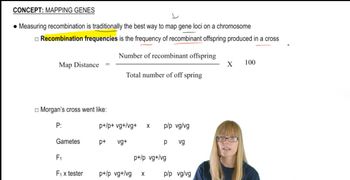
Mapping Genes
Evidence from Epidemiology and Experimental Studies
Epidemiological data show that cancer incidence increases with age, reflecting the time needed for multiple mutations to accumulate. Experimental models also demonstrate that introducing a single mutation rarely causes cancer, supporting the requirement of multiple genetic alterations.
Recommended video:
Guided course
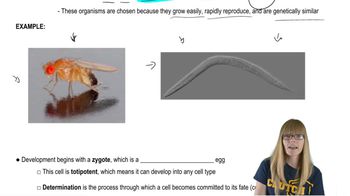
Genetics of Development
Watch next
Master Cancer Characteristics with a bite sized video explanation from Kylia
Start learningRelated Videos
Related Practice
Multiple Choice
740
views
2
rank