Pearson+ LogoPearson+ Logo
Ch. 15 - Gene Mutation, DNA Repair, and Transposition
Klug - Concepts of Genetics  12th Edition
Klug12th EditionConcepts of Genetics ISBN: 9780135564776Not the one you use?Change textbook
Chapter 15, Problem 1b

How do we know that certain chemicals and wavelengths of radiation induce mutations in DNA?

Verified step by step guidance
1
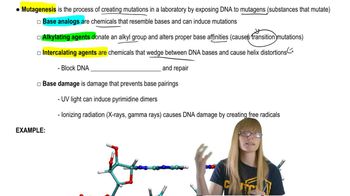
Understand that mutations are changes in the DNA sequence, which can be caused by various external factors called mutagens, including certain chemicals and types of radiation.
Recognize that scientists use controlled experiments where cells or organisms are exposed to specific chemicals or radiation wavelengths, then analyze the DNA for changes compared to unexposed controls.
Learn that molecular techniques such as DNA sequencing, gel electrophoresis, or reporter gene assays are used to detect and characterize mutations induced after exposure to these agents.
Note that the correlation between exposure to a particular chemical or radiation wavelength and an increased mutation rate, compared to natural background mutation rates, provides evidence that these agents induce mutations.
Understand that further confirmation comes from observing specific types of mutations or DNA damage patterns known to be caused by certain mutagens, linking the chemical or radiation to the mutation mechanism.

Verified video answer for a similar problem:

This video solution was recommended by our tutors as helpful for the problem above.
Video duration:
2m
Was this helpful?

Key Concepts

Here are the essential concepts you must grasp in order to answer the question correctly.

Mutagenesis

Mutagenesis is the process by which the genetic information of an organism is changed, resulting in mutations. Certain chemicals and radiation can cause alterations in DNA sequences, leading to mutations. Understanding mutagenesis helps explain how external agents induce genetic changes.
Recommended video:
Guided course
04:29
Induced Mutations

Experimental Evidence of Mutation Induction

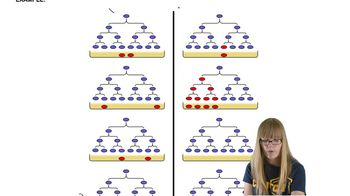
Scientists use controlled experiments exposing organisms or cells to specific chemicals or radiation and observe increased mutation rates compared to controls. Techniques like fluctuation tests and DNA sequencing confirm that these agents cause mutations, providing direct evidence of their mutagenic effects.
Recommended video:
Guided course
09:52
Spontaneous Mutations

DNA Damage and Repair Mechanisms

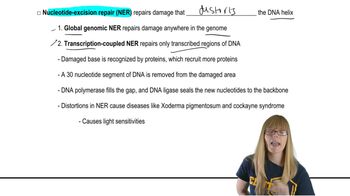
Chemicals and radiation can cause DNA damage such as base modifications, breaks, or crosslinks. The cell’s DNA repair systems attempt to fix this damage, but errors during repair can lead to mutations. Studying these mechanisms clarifies how mutagens alter DNA and result in permanent genetic changes.
Recommended video:
Guided course
05:44
Repair Pathways