Pearson+ LogoPearson+ Logo
Ch. 15 - Gene Mutation, DNA Repair, and Transposition
Klug - Concepts of Genetics  12th Edition
Klug12th EditionConcepts of Genetics ISBN: 9780135564776Not the one you use?Change textbook
Chapter 15, Problem 3

What is a spontaneous mutation, and why are spontaneous mutations rare?

Verified step by step guidance
1
Define a spontaneous mutation as a change in the DNA sequence that occurs naturally without any external influence, typically arising from errors during DNA replication or from natural chemical changes in the DNA.
Explain that spontaneous mutations can result from processes such as tautomeric shifts, depurination, deamination, or errors made by DNA polymerase during replication.
Discuss why spontaneous mutations are rare by highlighting the high fidelity of DNA replication mechanisms, including proofreading by DNA polymerase and mismatch repair systems that correct most errors before they become permanent mutations.
Mention that the chemical stability of DNA and cellular repair mechanisms also contribute to minimizing the frequency of spontaneous mutations.
Summarize that although spontaneous mutations occur naturally, their rarity is due to the combined effect of accurate DNA replication and efficient repair systems that maintain genetic integrity.

Verified video answer for a similar problem:

This video solution was recommended by our tutors as helpful for the problem above.
Video duration:
1m
Was this helpful?

Key Concepts

Here are the essential concepts you must grasp in order to answer the question correctly.

Spontaneous Mutation

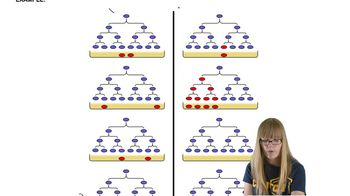
A spontaneous mutation is a genetic change that occurs naturally without any external influence, often due to errors in DNA replication or spontaneous chemical changes in the DNA. These mutations arise randomly and can affect a single nucleotide or larger DNA segments.
Recommended video:
Guided course
09:52
Spontaneous Mutations

DNA Replication Fidelity

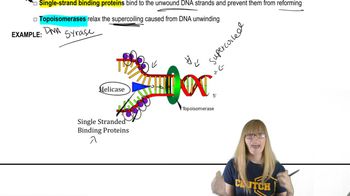
DNA replication fidelity refers to the accuracy with which DNA is copied during cell division. High fidelity is maintained by proofreading and repair mechanisms that correct errors, which significantly reduces the frequency of spontaneous mutations.
Recommended video:
Guided course
11:59
Steps to DNA Replication

DNA Repair Mechanisms

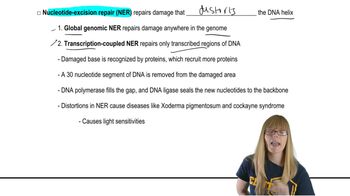
DNA repair mechanisms are cellular processes that detect and fix damaged or incorrectly paired bases in DNA. These systems, such as mismatch repair and base excision repair, help maintain genetic stability by correcting spontaneous errors before they become permanent mutations.
Recommended video:
Guided course
05:44
Repair Pathways