Pearson+ LogoPearson+ Logo
Ch. 14 - Analysis of Gene Function via Forward Genetics and Reverse Genetics
Sanders - Genetic Analysis: An Integrated Approach 3rd Edition
Sanders3rd EditionGenetic Analysis: An Integrated ApproachISBN: 9780135564172Not the one you use?Change textbook
Chapter 14, Problem C.3b

For the retinal cancer retinoblastoma, the inheritance of one mutated copy of RB1 from one of the parents is often referred to as a mutation that produces a 'dominant predisposition to cancer.' This means that the first mutation does not produce cancer but makes it very likely that cancer will develop.
Explain why cancer is almost certain to develop with the inheritance of one mutated copy of RB1.

Verified step by step guidance
1
Understand that the RB1 gene is a tumor suppressor gene, which means its normal function is to regulate cell division and prevent uncontrolled cell growth.
Recognize that individuals inherit two copies of the RB1 gene, one from each parent, and both copies usually need to be inactivated or mutated for cancer to develop (following the 'two-hit hypothesis').
When a person inherits one mutated copy of RB1, this is considered the 'first hit,' which alone does not cause cancer but predisposes the individual to cancer because only one additional mutation (the 'second hit') in the other copy is needed.
Since the second mutation can occur spontaneously in any retinal cell during the person's lifetime, the likelihood of this happening is very high, making cancer development almost certain.
Therefore, the inheritance of one mutated RB1 copy creates a dominant predisposition because it significantly increases the probability that the second mutation will occur, leading to loss of tumor suppressor function and cancer.

Verified video answer for a similar problem:

This video solution was recommended by our tutors as helpful for the problem above.
Video duration:
2m
Was this helpful?

Key Concepts

Here are the essential concepts you must grasp in order to answer the question correctly.

Tumor Suppressor Genes and the RB1 Gene

Tumor suppressor genes, like RB1, regulate cell growth and prevent uncontrolled division. A mutation in one copy of RB1 impairs its function, but cancer usually requires both copies to be inactivated. The inherited mutated copy predisposes cells to cancer by reducing tumor suppression.
Recommended video:
Guided course
09:09
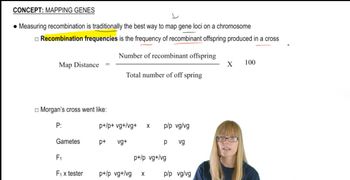
Mapping Genes

Knudson's Two-Hit Hypothesis

This hypothesis explains that both alleles of a tumor suppressor gene must be mutated for cancer to develop. In retinoblastoma, inheriting one mutated RB1 allele is the first 'hit,' and a second somatic mutation in the other allele triggers tumor formation, making cancer highly likely.
Recommended video:
Guided course
03:13
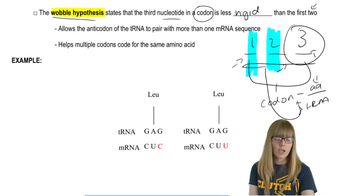
Translation:Wobble Hypothesis

Dominant Predisposition vs. Dominant Mutation

A dominant predisposition means inheriting one mutated gene increases cancer risk but does not directly cause cancer. Unlike dominant mutations that cause disease outright, the RB1 mutation acts recessively at the cellular level but appears dominant in inheritance due to high cancer risk.
Recommended video:
Guided course
04:37
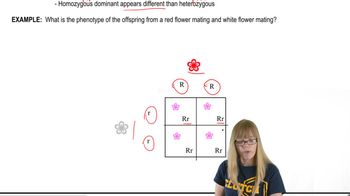
Variations on Dominance