Pearson+ LogoPearson+ Logo
Ch. 14 - Analysis of Gene Function via Forward Genetics and Reverse Genetics
Sanders - Genetic Analysis: An Integrated Approach 3rd Edition
Sanders3rd EditionGenetic Analysis: An Integrated ApproachISBN: 9780135564172Not the one you use?Change textbook
Chapter 14, Problem C.6b

Radiation is frequently used as part of the treatment of cancer. The radiation works by damaging DNA and components of the cell. Is there a risk of damage to noncancer cells?

Verified step by step guidance
1
Understand that radiation therapy targets rapidly dividing cancer cells by damaging their DNA, which prevents them from replicating and surviving.
Recognize that noncancerous (normal) cells in the vicinity of the treatment area can also be exposed to radiation, as the radiation is not perfectly selective.
Consider that DNA damage in noncancer cells can lead to cell death or mutations, which may cause side effects or long-term risks such as secondary cancers.
Explore the concept of differential sensitivity, where some normal cells may be more resistant or able to repair DNA damage better than cancer cells, influencing the extent of risk.
Conclude that while radiation therapy aims to minimize harm to normal cells, there is an inherent risk of damage to noncancer cells due to the nature of radiation exposure.

Verified video answer for a similar problem:

This video solution was recommended by our tutors as helpful for the problem above.
Video duration:
2m
Was this helpful?

Key Concepts

Here are the essential concepts you must grasp in order to answer the question correctly.

Mechanism of Radiation Therapy

Radiation therapy uses high-energy radiation to damage the DNA of cancer cells, preventing their replication and leading to cell death. It targets rapidly dividing cells but can also affect other cells in the treatment area.
Recommended video:
Guided course
09:12
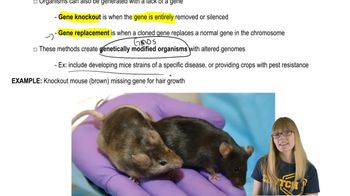
Transgenic Organisms and Gene Therapy

DNA Damage and Repair

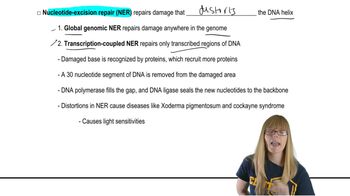
Radiation causes breaks and mutations in DNA strands. While cancer cells often have impaired repair mechanisms, normal cells can sometimes repair this damage, but excessive damage may lead to cell death or mutations.
Recommended video:
Guided course
05:44
Repair Pathways

Effects on Noncancerous Cells

Noncancerous cells near the radiation site can also be damaged because radiation is not perfectly selective. This can cause side effects and risks, as healthy tissue may be harmed during treatment.
Recommended video:
Guided course
03:38
Maternal Effect
Related Practice
Textbook Question

A tumor is a growing mass of abnormal cells. What must happen for a benign tumor to become malignant?

680
views
Textbook Question

Genetic counseling has not been discussed in this chapter, but it is a service provided by trained professional counselors who also have detailed knowledge of medical genetics, as described in Application Chapter A. Genetic counselors provide details about gene mutations and have knowledge of most of the details of diseases associated with genetic abnormalities. With regard to genetic testing to identify one's personal risk of cancer, what are the three or four topics you think are most important to be able to discuss with a genetic counselor?

620
views
Textbook Question

Radiation is frequently used as part of the treatment of cancer. The radiation works by damaging DNA and components of the cell. How can radiation treatment control or cure cancer?

597
views
Textbook Question

Go to the website http://www.cancer.gov and select 'Cancer Types' on the top menu bar. Scroll down to 'Breast Cancer' and click. Select 'Cases & Prevention' from the options. Click 'More information' and select 'BRCA Mutations: Cancer Risk and Genetic Testing'. Use the information on this page to answer the following questions. With regard to the results of genetic testing for BRCA1 and BRCA2 mutations, what is meant by a 'positive result'?

408
views
Textbook Question

The inheritance of certain mutations of BRCA1 can make it much more likely that a woman will develop breast or ovarian cancer in her lifetime. Can you say with certainty that a woman inheriting a mutation of BRCA1 will definitely develop breast or ovarian cancer in her lifetime? Why or why not?

451
views
Textbook Question

Go to the website http://www.cancer.gov and select 'Cancer Types' on the top menu bar. Scroll down to 'Breast Cancer' and click. Select 'Cases & Prevention' from the options. Click 'More information' and select 'BRCA Mutations: Cancer Risk and Genetic Testing'. Use the information on this page to answer the following questions. What are the approximate percentage increases in risk of having breast cancer and of having ovarian cancer for women inheriting harmful mutations of BRCA1 and BRCA2 compared with the risks in the general population?

466
views