Pearson+ LogoPearson+ Logo
Ch. 16 - Genomics: Genetics from a Whole-Genome Perspective
Sanders - Genetic Analysis: An Integrated Approach 3rd Edition
Sanders3rd EditionGenetic Analysis: An Integrated ApproachISBN: 9780135564172Not the one you use?Change textbook
Chapter 16, Problem 4

How do cDNA sequences facilitate gene annotation? Describe how the use of full-length cDNAs facilitates discovery of alternative splicing.

Verified step by step guidance
1
span>Understand that cDNA (complementary DNA) is synthesized from an mRNA template using the enzyme reverse transcriptase. This process captures the exons of a gene, which are the coding regions, and excludes introns, which are non-coding regions.
span>Recognize that cDNA sequences represent the expressed genes in a cell, providing a snapshot of the active genes at a particular time. This makes cDNA a valuable tool for gene annotation, as it helps identify which parts of the genome are transcribed into mRNA.
span>Full-length cDNAs are particularly useful because they represent the entire mRNA transcript, including the 5' and 3' untranslated regions (UTRs). This comprehensive representation aids in accurately annotating the start and end of genes.
span>Alternative splicing is a process where a single gene can lead to multiple mRNA variants, resulting in different protein isoforms. Full-length cDNAs can reveal these variants by showing different exon combinations in the cDNA sequences.
span>By comparing full-length cDNA sequences to the genomic DNA, researchers can identify alternative splicing events, such as exon skipping, alternative 5' or 3' splice sites, and intron retention, thus enhancing our understanding of gene complexity and regulation.

Verified video answer for a similar problem:

This video solution was recommended by our tutors as helpful for the problem above.
Video duration:
1m
Was this helpful?

Key Concepts

Here are the essential concepts you must grasp in order to answer the question correctly.

cDNA (complementary DNA)

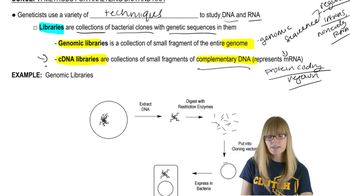
cDNA is synthesized from messenger RNA (mRNA) through the process of reverse transcription. It represents the coding sequence of a gene without introns, making it a valuable tool for studying gene expression and function. By analyzing cDNA sequences, researchers can identify which genes are actively expressed in a particular cell type or condition, aiding in gene annotation.
Recommended video:
Guided course
07:40
Methods for Analyzing DNA and RNA

Gene Annotation

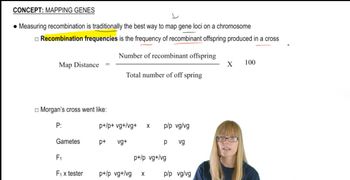
Gene annotation involves identifying the locations and functions of genes within a genome. This process includes determining the structure of genes, such as exons and introns, and their regulatory elements. cDNA sequences play a crucial role in gene annotation by providing a clear picture of the expressed regions of genes, which helps in accurately mapping and characterizing them.
Recommended video:
Guided course
09:09
Mapping Genes

Alternative Splicing

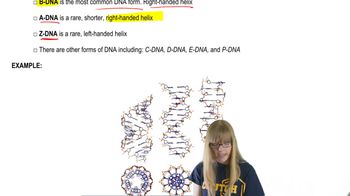
Alternative splicing is a process by which a single gene can produce multiple mRNA variants by including or excluding certain exons during transcription. This mechanism allows for increased protein diversity and regulation of gene expression. Full-length cDNAs are essential for discovering alternative splicing events, as they capture the complete mRNA transcript, enabling researchers to identify different splice variants and their functional implications.
Recommended video:
Guided course
01:57
Alternative DNA Forms