Pearson+ LogoPearson+ Logo
Ch. 16 - Genomics: Genetics from a Whole-Genome Perspective
Sanders - Genetic Analysis: An Integrated Approach 3rd Edition
Sanders3rd EditionGenetic Analysis: An Integrated ApproachISBN: 9780135564172Not the one you use?Change textbook
Chapter 16, Problem 20

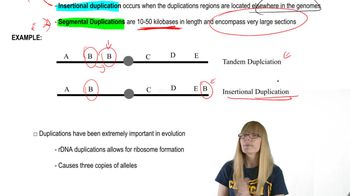
Substantial fractions of the genomes of many plants consist of segmental duplications; for example, approximately 40% of genes in the Arabidopsis genome are duplicated. How might you approach the functional characterization of such genes using reverse genetics?

Verified step by step guidance
1
Understand the concept of reverse genetics: Reverse genetics involves studying the function of a gene by analyzing the phenotypic effects of specific gene disruptions or modifications. This is the opposite of forward genetics, which starts with a phenotype and works toward identifying the gene responsible.
Identify the duplicated genes: Use bioinformatics tools to identify and catalog the duplicated genes in the Arabidopsis genome. This can be done by comparing sequences within the genome to find regions of high similarity, indicating duplication.
Design gene-specific knockouts or knockdowns: Use techniques such as CRISPR-Cas9 for targeted gene editing or RNA interference (RNAi) to specifically disrupt or reduce the expression of the duplicated genes. Ensure that the design accounts for the high similarity between duplicated genes to avoid off-target effects.
Analyze phenotypic effects: Grow the genetically modified plants under controlled conditions and observe any changes in phenotype compared to wild-type plants. This could include changes in growth, development, stress responses, or other traits.
Perform functional redundancy tests: Since duplicated genes often have overlapping functions, test for functional redundancy by creating double or multiple knockouts of closely related genes. This can help reveal the roles of individual genes and their contributions to the plant's biology.

Verified video answer for a similar problem:

This video solution was recommended by our tutors as helpful for the problem above.
Video duration:
2m
Was this helpful?

Key Concepts

Here are the essential concepts you must grasp in order to answer the question correctly.

Segmental Duplications

Segmental duplications refer to large regions of the genome that have been duplicated and can lead to gene redundancy. In plants like Arabidopsis, these duplications can significantly impact genetic diversity and evolution. Understanding these duplications is crucial for functional studies, as they can complicate the interpretation of gene function due to the presence of multiple similar genes.
Recommended video:

Reverse Genetics

Reverse genetics is a method used to understand the function of a gene by analyzing the phenotypic effects of specific gene modifications. This approach often involves techniques such as gene knockout, where a gene is deliberately disrupted to observe changes in the organism. In the context of segmental duplications, reverse genetics can help determine which duplicated gene is responsible for a particular trait or function.
Recommended video:
Guided course
07:39
Genetic Cloning

Functional Characterization

Functional characterization involves determining the role and activity of genes within an organism. This process often includes assessing gene expression patterns, protein interactions, and phenotypic outcomes of gene modifications. For duplicated genes, functional characterization is essential to discern the unique contributions of each gene copy, which can be critical for understanding complex traits in plants.
Recommended video:
Guided course
08:26
Functional Genomics
Related Practice
Textbook Question

You have isolated a gene that is important for the production of milk and wish to study its regulation. You examine the genomes of human, mouse, dog, chicken, pufferfish, and yeast and note that all genomes except yeast have an orthologous gene.

How would you identify the regulatory elements important for the expression of your isolated gene in mammary glands?

532
views
Textbook Question

When the human genome is examined, the chromosomes appear to have undergone only minimal rearrangement in the 100 million years since the last common ancestor of eutherian mammals. However, when individual humans are examined or when the human genome is compared with that of chimpanzees, a large number of small indels and SNPs can be detected. How are these observations reconciled?

441
views
Textbook Question

Symbiodinium minutum is a dinoflagellate with a genome size that encodes more than 40,000 protein-coding genes. In contrast, the genome of Plasmodium falciparum has only a little more than 5000 protein-coding genes. Both Symbiodinium and Plasmodium are members of the Alveolate lineage of eukaryotes. What might be the cause of such a wide variation in their genome sizes?

511
views
Textbook Question

A modification of the two-hybrid system, called the one-hybrid system, is used for identifying proteins that can bind specific DNA sequences. In this method, the DNA sequence to be tested, the bait, is fused to a TATA box to drive expression of a reporter gene. The reporter gene is often chosen to complement a mutant phenotype; for example, a HIS gene may be used in a his⁻ mutant yeast strain. A cDNA library is constructed with the cDNA sequences translationally fused to the GAL4 activation domain and transformed into this yeast strain. Diagram how trans-acting proteins that bind to cis-acting regulatory sequences can be identified using a one-hybrid screen.

548
views
Textbook Question

A substantial fraction of almost every genome sequenced consists of genes that have no known function and that do not have sequence similarity to any genes with known function. Describe two approaches to ascertaining the biological role of these genes in S. cerevisiae.

714
views
Textbook Question

A substantial fraction of almost every genome sequenced consists of genes that have no known function and that do not have sequence similarity to any genes with known function. How would your approach change if the genes of unknown function were in the human genome?

672
views