Textbook Question
Consider the phylogenetic tree presented in the following figure (Figure 17.17). How were the origins of secondary endosymbiosis in the brown algae determined?
574
views

 Sanders 3rd EditionCh. 17 - Organelle Inheritance and the Evolution of Organelle GenomesProblem 7
 Verified step by step guidance
 04:11
04:11 04:11
04:11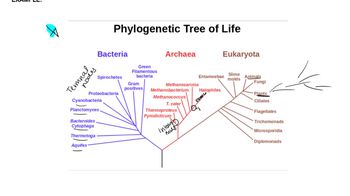 08:16
08:16Consider the phylogenetic tree presented in the following figure (Figure 17.17). How were the origins of secondary endosymbiosis in the brown algae determined?
Outline the steps required for a gene originally present in the endosymbiont genome to be transferred to the nuclear genome and be expressed, and for its product to be targeted back to the organelle of origin.
Draw a graph depicting the relative amounts of nuclear DNA present in the different stages of the cell cycle (G₁,S,G₂,M). On the same graph, plot the amount of mitochondrial DNA present at each stage of the cell cycle.
What is the evidence that transfer of DNA from the organelles to the nucleus continues to occur?
You are a genetic counselor, and several members of the family whose pedigree for an inherited disorder is depicted in Genetic Analysis 17.2 consult with you about the probability that their progeny may be afflicted. What advice would you give individuals III-1, III-2, III-4, III-6, III-8, and III-9?
What are the differences between the universal code and that found in the mitochondria of some species? Given that some changes (UGA =stop→Trp) have occurred multiple independent times in evolution, can you think of any selective advantage to the mitochondrial code?