
Textbook Question
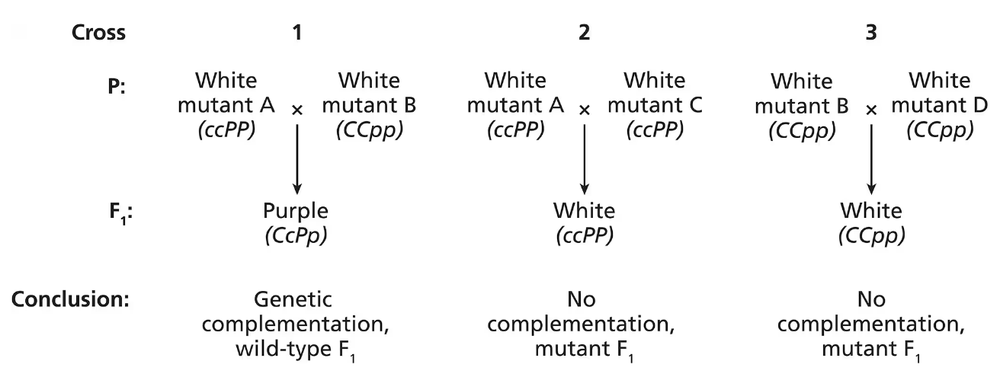
Epistatic gene interaction results in a modification of the F₂ dihybrid ratio.
What is the expected F₂ ratio?
637
views

 Verified step by step guidance
 05:05
05:05
 06:28
06:28 02:09
02:09Epistatic gene interaction results in a modification of the F₂ dihybrid ratio.
What is the expected F₂ ratio?
In rabbits, albinism is an autosomal recessive condition caused by the absence of the pigment melanin from skin and fur. Pigmentation is a dominant wild-type trait. Three pure-breeding strains of albino rabbits, identified as strains 1, 2, and 3, are crossed to one another. In the table below, F₁ and F₂ progeny are shown for each cross. Based on the available data, propose a genetic explanation for the results. As part of your answer, create genotypes for each albino strain using clearly defined symbols of your own choosing. Use your symbols to diagram each cross, giving the F₁ and F₂ genotypes. <>
Epistatic gene interaction results in a modification of the F₂ dihybrid ratio.
What genetic principle is the basis of this expected F₂ ratio?
Dr. O. Sophila, a close friend of Dr. Ara B. Dopsis, reviews the results Dr. Dopsis obtained in his experiment with iris plants described in Genetic Analysis 4.3. Dr. Sophila thinks the F₂ progeny demonstrate that a single gene with incomplete dominance has produced a 1:2:1 ratio. Dr. Dopsis insists his proposal of recessive epistasis producing a 9:4:3 ratio in the F₂ is correct. To test his proposal, Dr. Dopsis examines the F₂ data under the assumptions of the single-gene incomplete dominance model using chi-square analysis. Calculate and interpret this chi-square value. Can Dr. Dopsis reject the single-gene incomplete dominance model on the basis of this analysis? Explain why or why not.
In a breed of domestic cattle, horns can appear on males and on females. Males and females can also be hornless. The following crosses are performed with parents from pure-breeding lines.
Explain the inheritance of this phenotype in cattle, and assign genotypes to all cattle in each cross.
The wild-type allele of a gene has an A–T base pair at a particular location in its sequence, and a mutant allele of the same gene has a G–C base pair at the same location. Otherwise, the sequences of the two alleles are identical. Does this information tell you anything about the dominance relationship of the alleles? Explain why or why not.