Pearson+ LogoPearson+ Logo
Ch. 4 - Gene Interaction
Sanders - Genetic Analysis: An Integrated Approach 3rd Edition
Sanders3rd EditionGenetic Analysis: An Integrated ApproachISBN: 9780135564172Not the one you use?Change textbook
Chapter 4, Problem 12a

Using the information provided in Problems 10 and 11, determine the genotype and phenotype of parents that produce the following progeny:
9/16 brown : 3/16 black : 4/16 albino

Verified step by step guidance
1
Analyze the phenotypic ratio of the progeny (9:3:4) to determine the type of genetic interaction. This ratio suggests epistasis, where one gene masks or modifies the expression of another gene.
Assign symbols to the genes involved. For example, let 'B' and 'b' represent alleles for one gene (e.g., coat color), and 'C' and 'c' represent alleles for another gene (e.g., pigment production). Assume 'B' is dominant for brown, 'b' is recessive for black, and 'c' is recessive for albino (epistatic).
Determine the genotypes of the progeny based on the phenotypes. For example, brown progeny (9/16) likely have at least one dominant allele for both genes (e.g., B_C_), black progeny (3/16) likely have a homozygous recessive genotype for one gene (e.g., bbC_), and albino progeny (4/16) likely have a homozygous recessive genotype for the epistatic gene (e.g., __cc).
Infer the genotypes of the parents based on the progeny ratios. Since the progeny include all three phenotypes, the parents are likely heterozygous for both genes (e.g., BbCc x BbCc). This would allow for the observed phenotypic ratio through independent assortment and epistasis.
Verify the phenotypic ratio by performing a Punnett square for the cross (e.g., BbCc x BbCc). Calculate the expected genotypic combinations and their corresponding phenotypes to ensure they match the observed 9:3:4 ratio.

Verified video answer for a similar problem:

This video solution was recommended by our tutors as helpful for the problem above.
Video duration:
27s
Was this helpful?

Key Concepts

Here are the essential concepts you must grasp in order to answer the question correctly.

Genotype

Genotype refers to the genetic constitution of an organism, specifically the alleles it possesses for a particular trait. In this context, it is essential to determine the specific alleles of the parent organisms that lead to the observed phenotypic ratios in the progeny. Understanding how dominant and recessive alleles interact is crucial for predicting the genotypes of the parents.
Recommended video:
Guided course
07:52
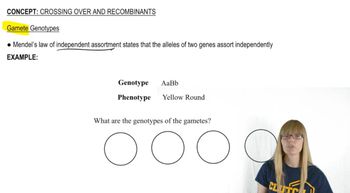
Gamete Genotypes

Phenotype

Phenotype is the observable physical or biochemical characteristics of an organism, determined by both its genotype and environmental influences. In this question, the phenotypic ratios of the progeny (brown, black, and albino) provide insight into the traits expressed by the parents. Analyzing these ratios helps in deducing the possible combinations of alleles that could result in the given offspring.
Recommended video:
Guided course
10:48
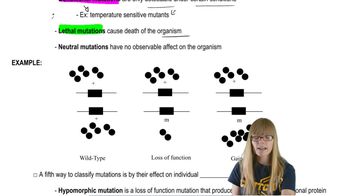
Mutations and Phenotypes

Punnett Square

A Punnett Square is a diagram used to predict the genotypes of offspring from a cross between two parents. It visually represents the possible combinations of alleles from each parent, allowing for the calculation of expected phenotypic ratios. In this scenario, constructing a Punnett Square based on the identified genotypes will help confirm the ratios of brown, black, and albino progeny.
Recommended video:
Guided course
18:27
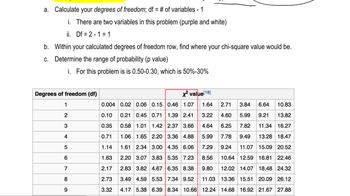
Chi Square Analysis
Related Practice
Textbook Question

In the rats identified in Problem 10, a third independently assorting gene involved in the determination of coat color is the C gene. At this locus, the genotype C– permits expression of pigment from genes B and D. The cc genotype, however, prevents expression of coat color and results in albino rats. For each of the following crosses, determine the expected phenotype ratio of progeny.

BBDdcc×BbddCc

392
views
Textbook Question

In the rats identified in Problem 10, a third independently assorting gene involved in the determination of coat color is the C gene. At this locus, the genotype C– permits expression of pigment from genes B and D. The cc genotype, however, prevents expression of coat color and results in albino rats. For each of the following crosses, determine the expected phenotype ratio of progeny.

bbDDCc×BBddCc

387
views
Textbook Question

In the rats identified in Problem 10, a third independently assorting gene involved in the determination of coat color is the C gene. At this locus, the genotype C– permits expression of pigment from genes B and D. The cc genotype, however, prevents expression of coat color and results in albino rats. For each of the following crosses, determine the expected phenotype ratio of progeny.

BbDdCC×BbDdCC

418
views
Textbook Question

Using the information provided in Problems 10 and 11, determine the genotype and phenotype of parents that produce the following progeny:

3/8 black : 3/8 cream : 2/8 albino

703
views
Textbook Question

Using the information provided in Problems 10 and 11, determine the genotype and phenotype of parents that produce the following progeny:

27/64 brown : 16/64 albino : 9/64 yellow : 9/64 black : 3/64 cream

490
views
Textbook Question

Using the information provided in Problems 10 and 11, determine the genotype and phenotype of parents that produce the following progeny:

3/4 brown : 1/4 yellow

566
views