Pearson+ LogoPearson+ Logo
Ch. 5 - Genetic Linkage and Mapping in Eukaryotes
Sanders - Genetic Analysis: An Integrated Approach 3rd Edition
Sanders3rd EditionGenetic Analysis: An Integrated ApproachISBN: 9780135564172Not the one you use?Change textbook
Chapter 5, Problem 29d

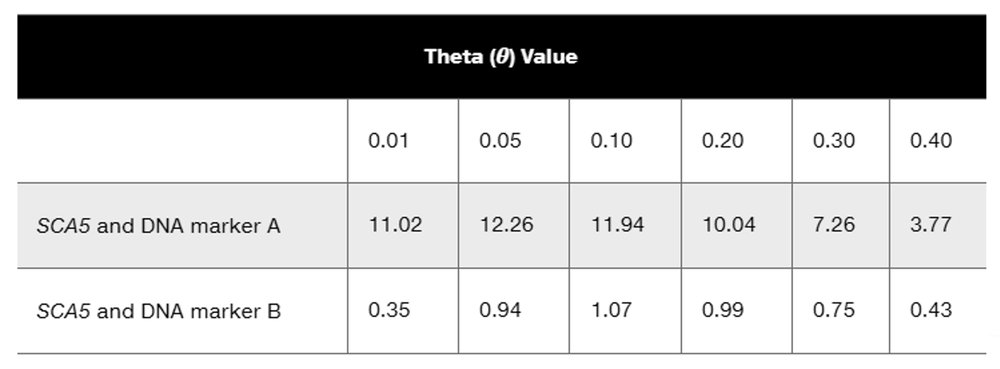
A 2006 genetic study of a large American family (Ikeda et al., 2006) identified genetic linkage between DNA markers on chromosome 11 and the gene producing the autosomal dominant neuromuscular disorder spinocerebellar ataxia type 5 (SCA5). The following lod score data are taken from the 2006 study:
Lod score data table comparing genetic linkage between SCA5 and DNA markers A and B across various theta values.
Based on available information, is DNA marker B linked to the gene for SCA5? Explain your answer.

Verified step by step guidance
1
Understand the concept of a lod score: A lod (logarithm of odds) score is used in genetic linkage analysis to determine whether two loci (e.g., a gene and a DNA marker) are likely to be located near each other on a chromosome. A lod score of 3 or higher is considered evidence of linkage, while a score below 3 suggests no significant linkage.
Examine the lod score data for DNA marker B: The lod scores for DNA marker B at various recombination fractions (θ values) are provided in the problem. These values are 0.35, 0.94, 1.07, 0.99, 0.75, and 0.43.
Compare the lod scores for DNA marker B to the threshold for linkage: Since the threshold for significant linkage is a lod score of 3 or higher, check whether any of the lod scores for DNA marker B meet or exceed this value.
Interpret the results: If none of the lod scores for DNA marker B reach the threshold of 3, this indicates that there is no significant evidence of linkage between DNA marker B and the gene for SCA5. Conversely, if any lod score is 3 or higher, it would suggest linkage.
Conclude based on the data: Based on the lod scores provided for DNA marker B, determine whether the evidence supports or refutes the hypothesis that DNA marker B is linked to the gene for SCA5.

Verified video answer for a similar problem:

This video solution was recommended by our tutors as helpful for the problem above.
Video duration:
3m
Was this helpful?

Key Concepts

Here are the essential concepts you must grasp in order to answer the question correctly.

Genetic Linkage

Genetic linkage refers to the tendency of genes located close to each other on a chromosome to be inherited together during meiosis. This is due to the reduced likelihood of recombination occurring between them. In the context of the question, understanding genetic linkage is crucial for determining whether DNA marker B is associated with the SCA5 gene based on the provided lod score data.
Recommended video:
Guided course
07:33
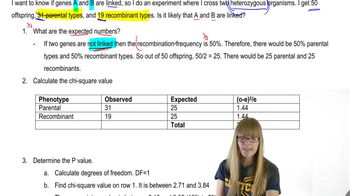
Chi Square and Linkage

Lod Score

A lod score (logarithm of the odds) is a statistical measure used to evaluate the likelihood of genetic linkage between a marker and a trait. A lod score greater than 3 typically indicates significant evidence of linkage, while scores below 0 suggest no linkage. In the study, the lod scores for DNA marker B at various theta values will help assess its potential linkage to the SCA5 gene.
Recommended video:
Guided course
04:06
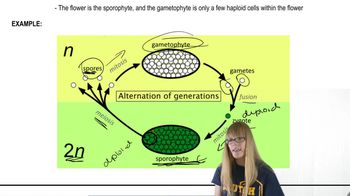
Formation of Plant Gametes

Theta (θ) Value

Theta (θ) value represents the recombination frequency between two genetic loci, indicating the probability that a crossover will occur between them during meiosis. Lower θ values suggest closer proximity and higher linkage, while higher values indicate greater distance and reduced linkage. Analyzing the θ values in conjunction with the lod scores for DNA marker B is essential for determining its relationship with the SCA5 gene.
Recommended video:
Related Practice
Textbook Question

A 2006 genetic study of a large American family (Ikeda et al., 2006) identified genetic linkage between DNA markers on chromosome 11 and the gene producing the autosomal dominant neuromuscular disorder spinocerebellar ataxia type 5 (SCA5). The following lod score data are taken from the 2006 study:                  

Does either group of lod scores indicate statistically significant odds in favor of genetic linkage? Explain your answer.

522
views
Textbook Question

A 2006 genetic study of a large American family (Ikeda et al., 2006) identified genetic linkage between DNA markers on chromosome 11 and the gene producing the autosomal dominant neuromuscular disorder spinocerebellar ataxia type 5 (SCA5). The following lod score data are taken from the 2006 study:                  

What is the maximum value for each set of lod scores?

534
views
Textbook Question

A 2006 genetic study of a large American family (Ikeda et al., 2006) identified genetic linkage between DNA markers on chromosome 11 and the gene producing the autosomal dominant neuromuscular disorder spinocerebellar ataxia type 5 (SCA5). The following lod score data are taken from the 2006 study:                  

Based on the available information, is DNA marker A linked to the gene producing SCA5? Explain your answer.

439
views
Textbook Question

A Drosophila experiment examining potential genetic linkage of X-linked genes studies a recessive eye mutant (echinus), a recessive wing-vein mutation (crossveinless), and a recessive bristle mutation (scute). The wild-type phenotypes are dominant. Trihybrid wild-type females (all have the same genotype) are crossed to hemizygous males displaying the three recessive phenotypes. Among the 20,765 progeny produced from these crosses are the phenotypes and numbers listed in the table. Any phenotype not given is wild type.

Determine the gene order and identify the alleles on the homologous X chromosomes in the trihybrid females.

497
views
Textbook Question

A Drosophila experiment examining potential genetic linkage of X-linked genes studies a recessive eye mutant (echinus), a recessive wing-vein mutation (crossveinless), and a recessive bristle mutation (scute). The wild-type phenotypes are dominant. Trihybrid wild-type females (all have the same genotype) are crossed to hemizygous males displaying the three recessive phenotypes. Among the 20,765 progeny produced from these crosses are the phenotypes and numbers listed in the table. Any phenotype not given is wild type.

Calculate the recombination frequencies between each of the gene pairs.

500
views
Textbook Question

A Drosophila experiment examining potential genetic linkage of X-linked genes studies a recessive eye mutant (echinus), a recessive wing-vein mutation (crossveinless), and a recessive bristle mutation (scute). The wild-type phenotypes are dominant. Trihybrid wild-type females (all have the same genotype) are crossed to hemizygous males displaying the three recessive phenotypes. Among the 20,765 progeny produced from these crosses are the phenotypes and numbers listed in the table. Any phenotype not given is wild type.

Compare the recombination frequencies and speculate about the source of any apparent discrepancies in the recombination data.

424
views