Pearson+ LogoPearson+ Logo
Ch. 5 - Genetic Linkage and Mapping in Eukaryotes
Sanders - Genetic Analysis: An Integrated Approach 3rd Edition
Sanders3rd EditionGenetic Analysis: An Integrated ApproachISBN: 9780135564172Not the one you use?Change textbook
Chapter 5, Problem 30c

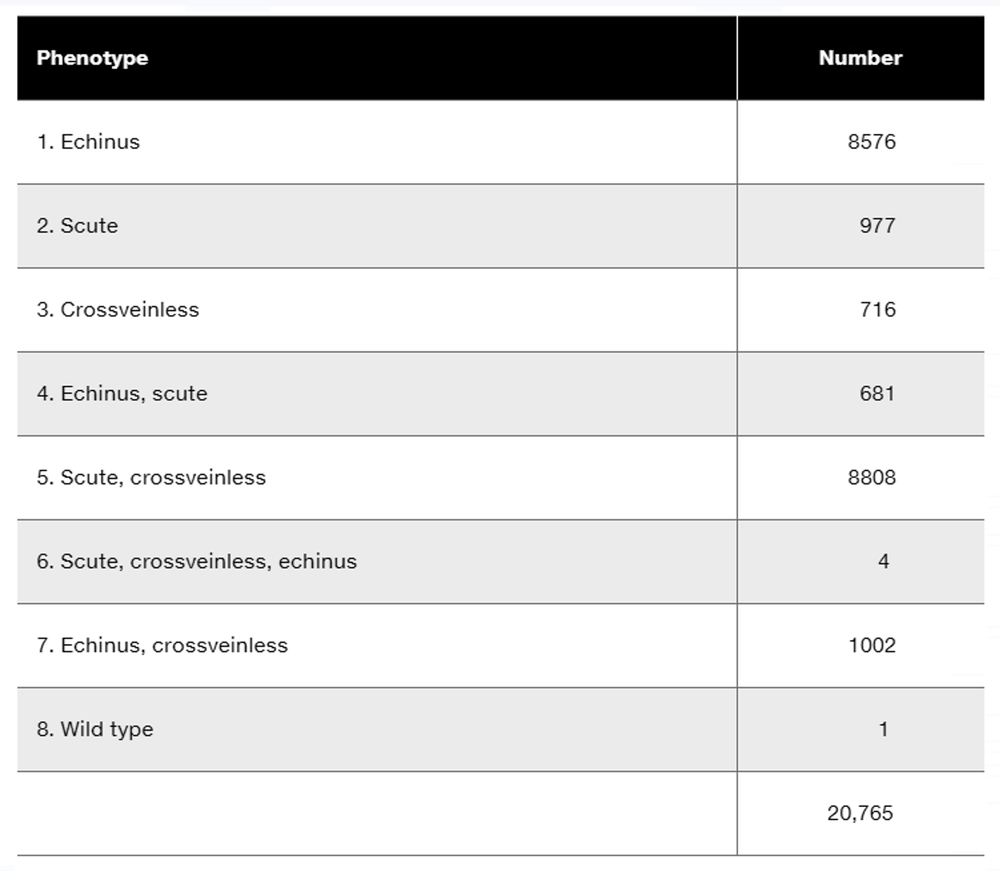
A Drosophila experiment examining potential genetic linkage of X-linked genes studies a recessive eye mutant (echinus), a recessive wing-vein mutation (crossveinless), and a recessive bristle mutation (scute). The wild-type phenotypes are dominant. Trihybrid wild-type females (all have the same genotype) are crossed to hemizygous males displaying the three recessive phenotypes. Among the 20,765 progeny produced from these crosses are the phenotypes and numbers listed in the table. Any phenotype not given is wild type.
Table displaying phenotypes and numbers from a Drosophila genetic linkage experiment, totaling 20,765 progeny.
Compare the recombination frequencies and speculate about the source of any apparent discrepancies in the recombination data.

Verified step by step guidance
1
Step 1: Understand the problem and the genetic setup. This experiment involves three X-linked genes in Drosophila: echinus (eye mutant), crossveinless (wing-vein mutation), and scute (bristle mutation). The wild-type phenotypes are dominant, and the goal is to analyze recombination frequencies to determine genetic linkage and map distances.
Step 2: Identify parental and recombinant phenotypes. Parental phenotypes are the most frequent (echinus and scute, crossveinless), while recombinant phenotypes are less frequent. Double crossovers (DCOs) are the least frequent (scute, crossveinless, echinus and wild type).
Step 3: Calculate recombination frequencies. To calculate the recombination frequency between two genes, sum the number of progeny with recombinant phenotypes for those two genes and divide by the total number of progeny. For example, to calculate the recombination frequency between echinus and scute, use the formula: RecombinantsTotal.
Step 4: Analyze discrepancies in recombination data. Compare the observed recombination frequencies to expected values based on independent assortment. Discrepancies may arise due to genetic linkage, interference, or experimental error. For example, if the observed double crossover frequency is lower than expected, this suggests interference.
Step 5: Speculate on the source of discrepancies. Genetic linkage between the genes can explain deviations from expected Mendelian ratios. Additionally, interference (a phenomenon where one crossover event reduces the likelihood of another nearby crossover) may affect the observed frequencies. Experimental factors, such as scoring errors or sample size, could also contribute to discrepancies.

Verified video answer for a similar problem:

This video solution was recommended by our tutors as helpful for the problem above.
Video duration:
2m
Was this helpful?

Key Concepts

Here are the essential concepts you must grasp in order to answer the question correctly.

Genetic Linkage

Genetic linkage refers to the tendency of genes located close to each other on the same chromosome to be inherited together during meiosis. This phenomenon affects the assortment of alleles and can lead to deviations from the expected Mendelian ratios in offspring. Understanding linkage is crucial for interpreting the results of genetic crosses, as it helps explain the observed frequencies of different phenotypes.
Recommended video:
Guided course
07:33
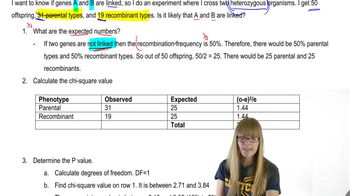
Chi Square and Linkage

Recombination Frequency

Recombination frequency is a measure of the likelihood that two genes will be separated during meiosis due to crossing over. It is calculated as the number of recombinant offspring divided by the total number of offspring, expressed as a percentage. This frequency provides insights into the distance between genes on a chromosome; closer genes have lower recombination frequencies, while genes that are farther apart show higher frequencies.
Recommended video:
Guided course
03:51
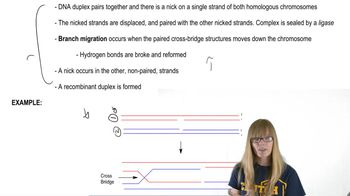
Recombination after Single Strand Breaks

Phenotypic Ratios

Phenotypic ratios represent the relative frequencies of different observable traits in the offspring resulting from a genetic cross. In this experiment, the ratios of the various phenotypes can indicate the presence of linkage or recombination events. Analyzing these ratios helps in understanding the genetic relationships between the traits and can reveal discrepancies that may arise from factors such as gene interaction or environmental influences.
Recommended video:
Guided course
10:48
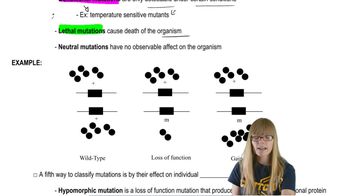
Mutations and Phenotypes
Related Practice
Textbook Question

A 2006 genetic study of a large American family (Ikeda et al., 2006) identified genetic linkage between DNA markers on chromosome 11 and the gene producing the autosomal dominant neuromuscular disorder spinocerebellar ataxia type 5 (SCA5). The following lod score data are taken from the 2006 study:

Based on available information, is DNA marker B linked to the gene for SCA5? Explain your answer.

592
views
Textbook Question

A Drosophila experiment examining potential genetic linkage of X-linked genes studies a recessive eye mutant (echinus), a recessive wing-vein mutation (crossveinless), and a recessive bristle mutation (scute). The wild-type phenotypes are dominant. Trihybrid wild-type females (all have the same genotype) are crossed to hemizygous males displaying the three recessive phenotypes. Among the 20,765 progeny produced from these crosses are the phenotypes and numbers listed in the table. Any phenotype not given is wild type.

Determine the gene order and identify the alleles on the homologous X chromosomes in the trihybrid females.

497
views
Textbook Question

A Drosophila experiment examining potential genetic linkage of X-linked genes studies a recessive eye mutant (echinus), a recessive wing-vein mutation (crossveinless), and a recessive bristle mutation (scute). The wild-type phenotypes are dominant. Trihybrid wild-type females (all have the same genotype) are crossed to hemizygous males displaying the three recessive phenotypes. Among the 20,765 progeny produced from these crosses are the phenotypes and numbers listed in the table. Any phenotype not given is wild type.

Calculate the recombination frequencies between each of the gene pairs.

500
views
Textbook Question

A Drosophila experiment examining potential genetic linkage of X-linked genes studies a recessive eye mutant (echinus), a recessive wing-vein mutation (crossveinless), and a recessive bristle mutation (scute). The wild-type phenotypes are dominant. Trihybrid wild-type females (all have the same genotype) are crossed to hemizygous males displaying the three recessive phenotypes. Among the 20,765 progeny produced from these crosses are the phenotypes and numbers listed in the table. Any phenotype not given is wild type.

Use chi-square analysis to demonstrate that the data in this experiment are not the result of independent assortment.

499
views
Textbook Question

A genetic study of an early onset form of heart disease identifies 10 families containing members with the condition. No clear dominant or recessive pattern of inheritance is evident, but an analysis of SNP markers for five families detects a strong association with a marker on chromosome 12, and genetic linkage analysis for the marker produces a lod score of 2.2.


What do the association and lod score results suggest about this genetic marker?

530
views
Textbook Question

A genetic study of an early onset form of heart disease identifies 10 families containing members with the condition. No clear dominant or recessive pattern of inheritance is evident, but an analysis of SNP markers for five families detects a strong association with a marker on chromosome 12, and genetic linkage analysis for the marker produces a lod score of 2.2.


What next step do you recommend for this genetic analysis?

425
views