A sample of double-stranded DNA is found to contain 20% cytosine. Determine the percentage of the three other DNA nucleotides in the sample.

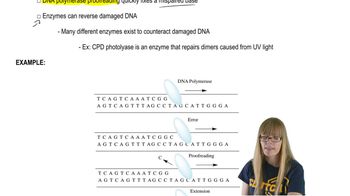
Bacterial DNA polymerase I and DNA polymerase III perform different functions during DNA replication.
If a strain of E. coli acquired a mutation that inactivated DNA polymerase III function, would the cell be able to replicate its DNA? Why or why not?
Verified step by step guidance
Verified video answer for a similar problem:
Key Concepts
DNA Replication
Roles of DNA Polymerases
Mutations and Their Effects
Bacterial DNA polymerase I and DNA polymerase III perform different functions during DNA replication.
Identify the principal functions of each molecule.
Bacterial DNA polymerase I and DNA polymerase III perform different functions during DNA replication.
If mutation inactivated DNA polymerase I in a strain of E. coli, would the cell be able to replicate its DNA? If so, what kind of abnormalities would you expect to find in the cell?
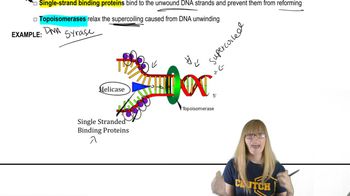
Diagram a replication fork in bacterial DNA and label the following structures or molecules.
a. DNA pol III
b. Helicase
c. RNA primer
d. Origin of replication
e. leading strand (label its polarity)
f. DNA pol I
g. Topoisomerase
h. SSB protein
i. Lagging strand (label its polarity)
j. Primase
k. Okazaki fragment
Which of the following equations are true for the percentages of nucleotides in double-stranded DNA?
(A+G)/(C+T)=1.0
Which of the following equations are true for the percentages of nucleotides in double-stranded DNA?
(A+T)/(G+C)=1.0
