Pearson+ LogoPearson+ Logo
Ch.4 Introduction to Organic Compounds
Frost - General, Organic and Biological Chemistry 4th Edition
Frost4th EditionGeneral, Organic and Biological ChemistryISBN: 9780134988696Not the one you use?Change textbook
Chapter 1, Problem 53a

Identify all of the functional groups in each of the following molecules:
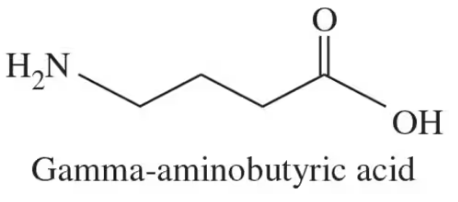
(a) Chemical structure of gamma-aminobutyric acid, showing amino, hydroxyl, and carboxyl functional groups.

Verified step by step guidance
1
Step 1: Understand the concept of functional groups. Functional groups are specific groups of atoms within molecules that are responsible for the characteristic chemical reactions of those molecules. Common functional groups include hydroxyl (-OH), carboxyl (-COOH), amino (-NH2), and others.
Step 2: Analyze the structure of Gamma-aminobutyric acid (GABA). GABA is a molecule with a specific arrangement of atoms, including carbon, hydrogen, oxygen, and nitrogen. You will need to identify the functional groups present in this structure.
Step 3: Look for the carboxyl group (-COOH). This group is typically found in organic acids and is characterized by a carbon atom double-bonded to an oxygen atom and single-bonded to a hydroxyl group.
Step 4: Identify the amino group (-NH2). This group consists of a nitrogen atom bonded to two hydrogen atoms and is commonly found in amino acids and other nitrogen-containing compounds.
Step 5: Confirm the presence of any other functional groups, such as hydroxyl (-OH) or alkyl groups, by carefully examining the molecular structure of GABA. Ensure that you account for all functional groups present in the molecule.

Verified video answer for a similar problem:

This video solution was recommended by our tutors as helpful for the problem above.
Video duration:
1m
Was this helpful?

Key Concepts

Here are the essential concepts you must grasp in order to answer the question correctly.

Functional Groups

Functional groups are specific groups of atoms within molecules that are responsible for the characteristic chemical reactions of those molecules. They determine the properties and reactivity of organic compounds. Common functional groups include hydroxyl (-OH), carboxyl (-COOH), amino (-NH2), and more, each imparting unique chemical behavior.
Recommended video:
Guided course
1:11
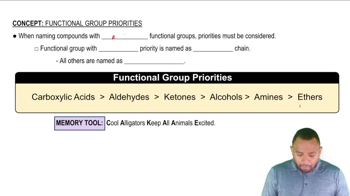
Functional Group Priorities Concept 1

Gamma-Aminobutyric Acid (GABA)

Gamma-aminobutyric acid (GABA) is a neurotransmitter in the brain that plays a crucial role in reducing neuronal excitability throughout the nervous system. It is derived from glutamate and contains both an amino group and a carboxylic acid group, making it an important molecule in the study of neurochemistry and pharmacology.
Recommended video:
Guided course
02:53
Gamma Emission Concept 2

Molecular Structure

Molecular structure refers to the arrangement of atoms within a molecule, including the types of bonds and the spatial orientation of the functional groups. Understanding the molecular structure of compounds like GABA is essential for identifying functional groups and predicting the molecule's behavior in biological systems.
Recommended video:
Guided course
00:34
Molecular Models Example 1