Pearson+ LogoPearson+ Logo
Ch.12 Food as Fuel An Overview of Metabolism
Frost - General, Organic and Biological Chemistry 4th Edition
Frost4th EditionGeneral, Organic and Biological ChemistryISBN: 9780134988696Not the one you use?Change textbook
Chapter 8, Problem 13

Using abbreviations (not structures), write the reaction of flavin adenine dinucleotide that gives off energy (–∆G) .

Verified step by step guidance
1
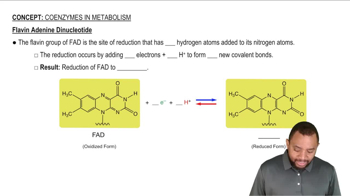
Identify the chemical reaction involving flavin adenine dinucleotide (FAD). FAD is a coenzyme that participates in redox reactions, typically being reduced to FADH₂ during energy-yielding processes.
Understand that the reaction giving off energy (negative ∆G) involves the oxidation of FADH₂ back to FAD. This process releases energy as electrons are transferred to the electron transport chain.
Write the reaction in abbreviated form: FADH2FAD+2H+2e-. This represents the oxidation of FADH₂, releasing protons and electrons.
Recognize that the electrons released during this reaction are transferred to the electron transport chain, where they contribute to the generation of ATP, the energy currency of the cell.
Note that the negative ∆G indicates that this reaction is exergonic, meaning it releases energy that can be harnessed for cellular processes.

Verified video answer for a similar problem:

This video solution was recommended by our tutors as helpful for the problem above.
Video duration:
4m
Was this helpful?

Key Concepts

Here are the essential concepts you must grasp in order to answer the question correctly.

Flavin Adenine Dinucleotide (FAD)

FAD is a redox cofactor involved in various metabolic reactions, particularly in the electron transport chain. It exists in two forms: oxidized (FAD) and reduced (FADH2). The conversion between these forms is crucial for energy production in cellular respiration, as FADH2 can donate electrons to the electron transport chain, leading to ATP synthesis.
Recommended video:
Guided course
1:05
Flavin Adenine Dinucleotide Concept 3

Gibbs Free Energy (∆G)

Gibbs Free Energy (∆G) is a thermodynamic quantity that indicates the spontaneity of a reaction. A negative ∆G value (―∆G) signifies that a reaction releases energy and can occur spontaneously. Understanding ∆G is essential for predicting whether a biochemical reaction, such as the reduction of FAD to FADH2, will proceed under physiological conditions.
Recommended video:
Guided course
01:04
Gibbs Free Energy (Simplified) Concept 3

Redox Reactions

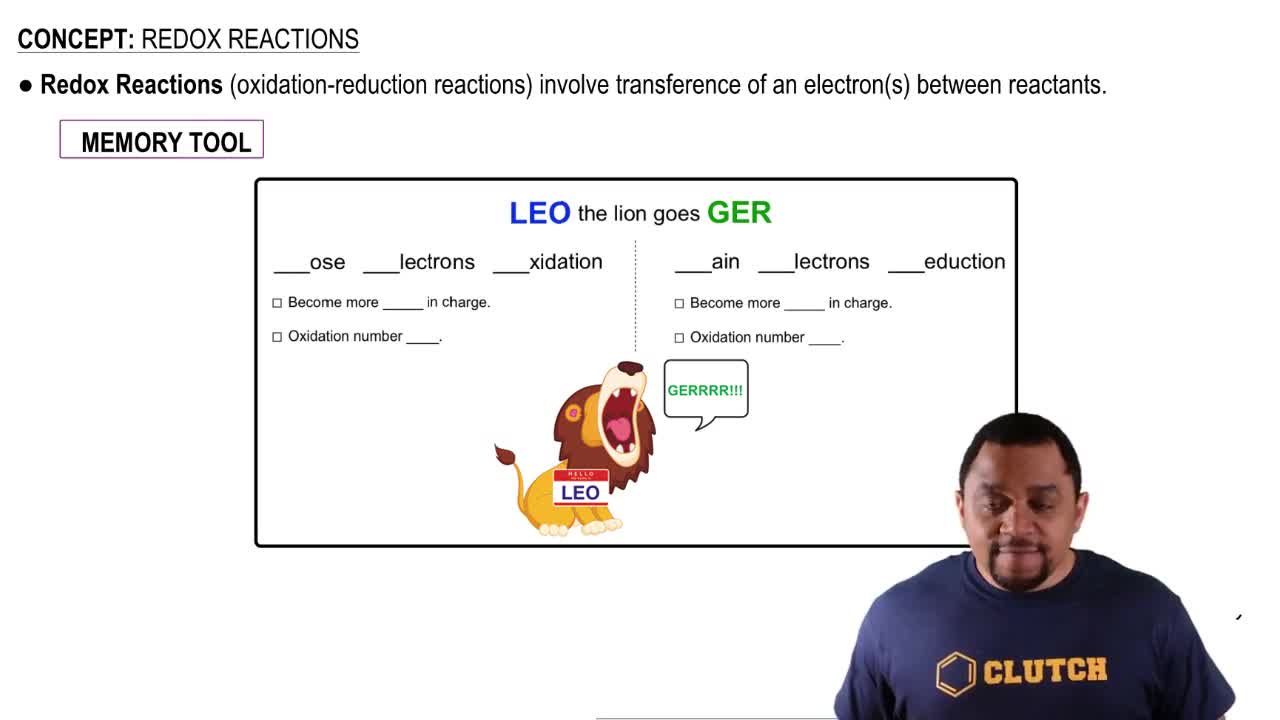
Redox reactions involve the transfer of electrons between molecules, resulting in changes in oxidation states. In the context of FAD, it acts as an electron acceptor in oxidation reactions, becoming reduced to FADH2. These reactions are fundamental in metabolic pathways, as they facilitate energy release and storage, contributing to the overall energy balance in cells.
Recommended video:
Guided course
01:53
Redox Reactions