Pearson+ LogoPearson+ Logo
Ch.21 The Generation of Biochemical Energy
McMurry - Fundamentals of GOB 8th Edition
McMurry8th EditionFundamentals of GOBISBN: 9780134015187Not the one you use?Change textbook
Chapter 21, Problem 47

Write the reaction for the hydrolysis of 1,3-bisphosphoglycerate coupled to the phosphorylation of ADP using the curved-arrow symbolism.

Verified step by step guidance
1
Identify the reactants and products involved in the reaction. The hydrolysis of 1,3-bisphosphoglycerate involves breaking a high-energy phosphate bond, and the phosphorylation of ADP involves adding a phosphate group to ADP to form ATP.
Write the chemical equation for the hydrolysis of 1,3-bisphosphoglycerate. The reaction releases a phosphate group (Pi) and forms 3-phosphoglycerate. Represent this as: 1,3-bisphosphoglycerate+H2O3-phosphoglycerate+Pi.
Write the chemical equation for the phosphorylation of ADP. This reaction uses the inorganic phosphate (Pi) released from the hydrolysis of 1,3-bisphosphoglycerate to convert ADP into ATP. Represent this as: ADP+PiATP.
Combine the two reactions into a single coupled reaction. The phosphate group released from 1,3-bisphosphoglycerate is directly used to phosphorylate ADP. The overall reaction can be written as: 1,3-bisphosphoglycerate+ADP3-phosphoglycerate+ATP.
Use curved-arrow symbolism to show the movement of electrons during the reaction. Indicate the breaking of the bond between the phosphate group and 1,3-bisphosphoglycerate, and the formation of a new bond between the phosphate group and ADP. This step involves drawing the reaction mechanism, which includes showing the nucleophilic attack of ADP on the phosphate group and the subsequent release of 3-phosphoglycerate.

Verified video answer for a similar problem:

This video solution was recommended by our tutors as helpful for the problem above.
Video duration:
2m
Was this helpful?

Key Concepts

Here are the essential concepts you must grasp in order to answer the question correctly.

Hydrolysis

Hydrolysis is a chemical reaction involving the breakdown of a compound by water. In biological systems, hydrolysis often refers to the cleavage of high-energy phosphate bonds, such as those in 1,3-bisphosphoglycerate, releasing energy that can be used for other reactions, like the phosphorylation of ADP.
Recommended video:
Guided course
1:12
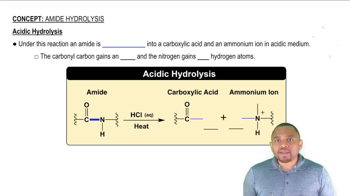
Acidic Hydrolysis Concept 1

Curved-Arrow Symbolism

Curved-arrow symbolism is a method used in organic chemistry to depict the movement of electrons during chemical reactions. Arrows indicate the direction of electron flow, helping to visualize the formation and breaking of bonds, which is essential for accurately representing the hydrolysis of 1,3-bisphosphoglycerate and the subsequent phosphorylation of ADP.
Recommended video:
Guided course
05:54
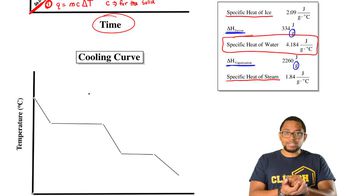
Heating and Cooling Curves Concept 2

Phosphorylation

Phosphorylation is the addition of a phosphate group to a molecule, often catalyzed by enzymes. In this context, the phosphorylation of ADP to form ATP is a crucial energy transfer process in cellular metabolism, allowing cells to store and utilize energy derived from the hydrolysis of compounds like 1,3-bisphosphoglycerate.
Recommended video:
Guided course
0:51
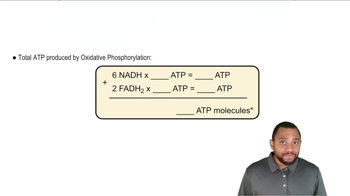
Oxidative Phosphorylation Concept 2