Ch.8 - Reactions of Alkenes
Wade - Organic Chemistry 9th Edition
Wade9th EditionOrganic ChemistryISBN: 9780135213728Not the one you use?Change textbook
Chapter 8, Problem 51g

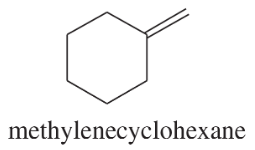
Show how you would synthesize each compound using methylenecyclohexane as your starting material.

(g)

Verified step by step guidance
1
Step 1: Begin with methylenecyclohexane as the starting material. This compound contains a cyclohexane ring with a methylene group attached, forming a double bond.
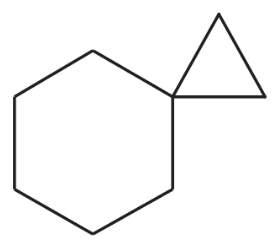
Step 2: To synthesize the target compound, which is a cyclopropane ring fused to the cyclohexane ring, use a reaction that forms cyclopropanes from alkenes. One common method is the Simmons-Smith reaction.
Step 3: In the Simmons-Smith reaction, react methylenecyclohexane with diiodomethane (CH2I2) and a zinc-copper couple (Zn-Cu). This reagent combination generates a carbenoid species that facilitates the cyclopropanation of the double bond.
Step 4: The carbenoid species adds to the double bond of methylenecyclohexane, forming the cyclopropane ring fused to the cyclohexane ring.
Step 5: After the reaction is complete, isolate and purify the product to obtain the desired compound, which is a bicyclic structure with a cyclopropane ring fused to the cyclohexane ring.

Verified video answer for a similar problem:

This video solution was recommended by our tutors as helpful for the problem above.
Video duration:
1m
Was this helpful?

Key Concepts

Here are the essential concepts you must grasp in order to answer the question correctly.

Organic Synthesis

Organic synthesis is the process of constructing organic compounds through chemical reactions. It involves a series of steps that transform starting materials into desired products, often utilizing various reagents and catalysts. Understanding the principles of organic synthesis is crucial for designing pathways to create specific compounds, such as those derived from methylenecyclohexane.
Recommended video:
1:16
Synthesis of Amino Acids: Strecker Synthesis Example 1

Reactivity of Alkenes

Methylenecyclohexane contains a double bond, classifying it as an alkene. Alkenes are known for their reactivity due to the presence of the π bond, which can participate in various reactions such as electrophilic addition, oxidation, and polymerization. Recognizing the reactivity patterns of alkenes is essential for predicting the outcomes of synthetic routes involving methylenecyclohexane.
Recommended video:
2:09
Alkene Metathesis Concept 1

Functional Group Transformation

Functional group transformation refers to the process of converting one functional group into another during a chemical reaction. This concept is vital in organic synthesis, as it allows chemists to modify the structure and properties of compounds. In the context of synthesizing compounds from methylenecyclohexane, understanding how to effectively change functional groups will facilitate the creation of diverse organic molecules.
Recommended video:
Guided course
02:36
Identifying Functional Groups