
Ch. 7 The Skeletal System
Amerman - Human Anatomy & Physiology 2nd Edition
Amerman2nd EditionHuman Anatomy & PhysiologyISBN: 9780136873822Not the one you use?Change textbook
Chapter 7, Problem L3.4

Predict where each of the following structures is located, based on your knowledge of skeletal anatomy and anatomical terms (your answers should be along the lines of 'lateral crural region' or 'posterior cervical region').


a. Frontal lobe of brain
b. Suprahyoid muscle
c. Ulnar artery
d. Tibial nerve
e. Intercostal muscle
f. External iliac artery

Verified step by step guidance
1
Step 1: Understand the anatomical terms and regions of the body. Familiarize yourself with directional terms such as anterior (front), posterior (back), lateral (side), medial (middle), and regional terms like cervical (neck), crural (leg), and thoracic (chest). These terms will help you locate the structures mentioned in the problem.
Step 2: For the 'Frontal lobe of brain,' recall that the frontal lobe is part of the brain located in the anterior cranial region. It is situated in the front part of the skull, above the eyes.
Step 3: For the 'Suprahyoid muscle,' recognize that this muscle group is located superior to the hyoid bone in the anterior cervical region. These muscles are involved in swallowing and are found in the neck area.
Step 4: For the 'Ulnar artery,' identify that this artery runs along the medial side of the forearm, supplying blood to the hand. It is located in the medial antebrachial region.
Step 5: For the 'Tibial nerve,' 'Intercostal muscle,' and 'External iliac artery,' apply similar reasoning: the tibial nerve is located in the posterior crural region (back of the leg), the intercostal muscles are found in the thoracic region (between the ribs), and the external iliac artery is located in the pelvic region, transitioning into the lower limb.

Verified video answer for a similar problem:

This video solution was recommended by our tutors as helpful for the problem above.
Was this helpful?

Key Concepts

Here are the essential concepts you must grasp in order to answer the question correctly.

Skeletal Anatomy

Skeletal anatomy refers to the study of the structure and function of bones and skeletal elements in the body. It includes understanding the locations, shapes, and relationships of bones, as well as how they connect to muscles and other tissues. Knowledge of skeletal anatomy is essential for identifying regions of the body and understanding how different structures interact within the musculoskeletal system.
Recommended video:
Guided course
3:04
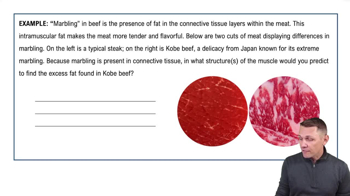
Structure of a Skeletal Muscle Example 1

Anatomical Terms of Location

Anatomical terms of location provide a standardized language to describe the positions of structures in the body. Terms such as 'anterior,' 'posterior,' 'medial,' and 'lateral' help specify the relative locations of organs and tissues. This terminology is crucial for accurately predicting the locations of various anatomical structures, as it allows for clear communication among healthcare professionals.
Recommended video:
Guided course
03:21
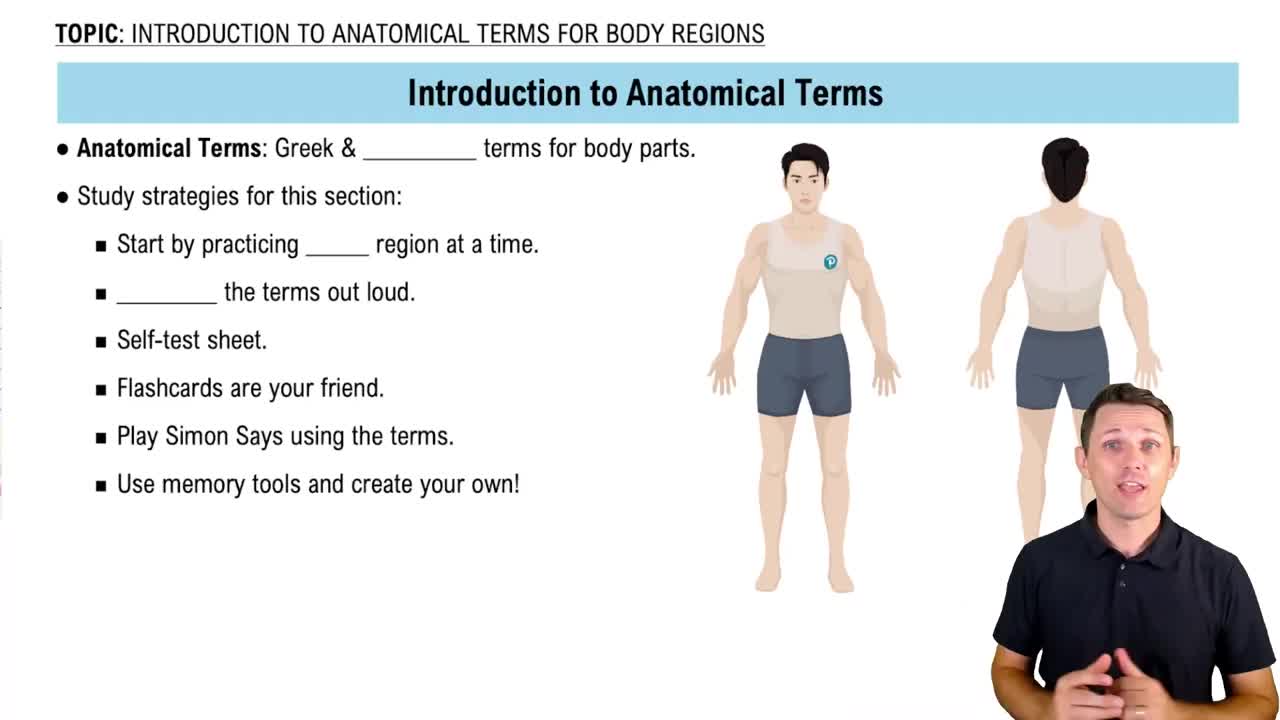
Introduction to Anatomical Terms

Neurovascular Structures

Neurovascular structures refer to the complex network of nerves and blood vessels that supply the body. Understanding the pathways and locations of these structures, such as arteries and nerves, is vital for predicting their anatomical positions. For example, knowing that the ulnar artery runs along the medial side of the forearm helps in identifying its location relative to other anatomical landmarks.
Recommended video:
Guided course
4:16
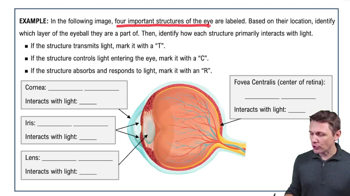
Structure of the Eyeball Example 1