Ch. 19 Blood
Amerman - Human Anatomy & Physiology 2nd Edition
Amerman2nd EditionHuman Anatomy & PhysiologyISBN: 9780136873822Not the one you use?Change textbook
Chapter 19, Problem L2.2

Predict how abnormal hemoglobin proteins that contain only two iron ions, instead of four, would affect homeostasis.

Verified step by step guidance
1
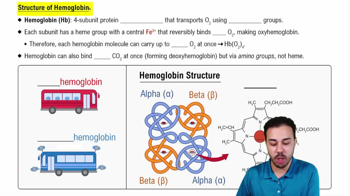
Understand the role of hemoglobin in the body: Hemoglobin is a protein found in red blood cells that binds oxygen in the lungs and transports it to tissues throughout the body. Each hemoglobin molecule typically contains four iron ions, which are essential for binding oxygen molecules.
Analyze the impact of reduced iron ions: If hemoglobin proteins contain only two iron ions instead of four, the oxygen-binding capacity of each hemoglobin molecule would be reduced by half. This means less oxygen would be transported to tissues, potentially leading to hypoxia (low oxygen levels in tissues).
Consider the effects on cellular respiration: Oxygen is a critical component for cellular respiration, the process by which cells produce energy (ATP). Reduced oxygen delivery would impair this process, leading to decreased energy production and affecting the function of various organs and systems.
Evaluate the consequences for homeostasis: Homeostasis refers to the body's ability to maintain stable internal conditions. Reduced oxygen transport would disrupt homeostasis by impairing tissue function, potentially causing symptoms such as fatigue, shortness of breath, and organ dysfunction.
Relate to compensatory mechanisms: The body may attempt to compensate for reduced oxygen transport by increasing heart rate, respiratory rate, or red blood cell production (via erythropoiesis). However, these compensatory mechanisms may not fully restore normal oxygen levels, leading to chronic stress on the cardiovascular and respiratory systems.

Verified video answer for a similar problem:

This video solution was recommended by our tutors as helpful for the problem above.
Was this helpful?

Key Concepts

Here are the essential concepts you must grasp in order to answer the question correctly.

Hemoglobin Structure and Function

Hemoglobin is a protein in red blood cells responsible for transporting oxygen from the lungs to the body's tissues. It consists of four subunits, each containing an iron ion that binds to oxygen. Abnormal hemoglobin with only two iron ions would impair its ability to carry oxygen effectively, leading to reduced oxygen delivery to tissues.
Recommended video:
6:45
Structure of Hemoglobin

Homeostasis

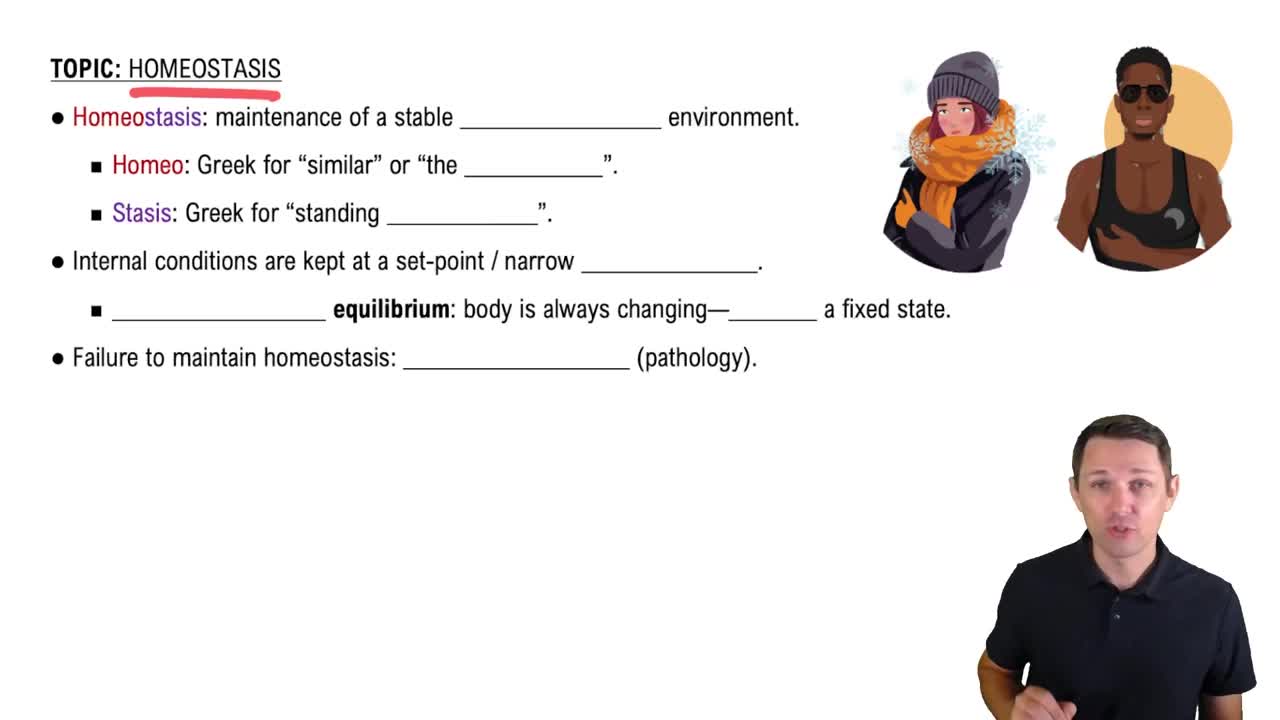
Homeostasis refers to the body's ability to maintain stable internal conditions despite external changes. This includes regulating temperature, pH, and the concentration of various substances, including oxygen. Disruption in oxygen transport due to abnormal hemoglobin can lead to hypoxia, triggering compensatory mechanisms that may strain other systems.
Recommended video:
Guided course
01:59
Introduction to Homeostasis

Compensatory Mechanisms

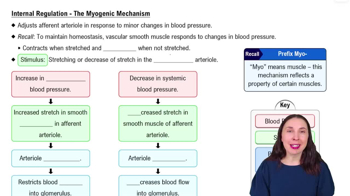
When homeostasis is disrupted, the body employs compensatory mechanisms to restore balance. For instance, if oxygen levels drop due to ineffective hemoglobin, the body may increase heart rate, enhance respiratory rate, or stimulate the production of more red blood cells. These responses aim to mitigate the effects of reduced oxygen availability and maintain overall physiological function.
Recommended video:
3:02
Internal Regulation - The Myogenic Mechanism
Related Practice
Textbook Question

Explain how blood, being a liquid, enables all its components (formed elements and plasma) to perform their functions.

1039
views

Textbook Question

The anticoagulant drug warfarin primarily disrupts the extrinsic/tissue factor coagulation pathway. Explain why disrupting only this pathway disrupts the entire coagulation cascade.

698
views
Textbook Question

Elise is a 36-year-old woman who has volunteered to donate red bone marrow to a patient in need of a bone marrow transplant for aplastic anemia. The physician performing the bone marrow extraction is an intern, and it is her first time doing the procedure. She asks that you prepare a site on Elise's tibia for the procedure. Is this a good place for red bone marrow to be extracted, considering Elise's age? Why or why not? Can you suggest an alternative location? Explain.

467
views
Textbook Question

Cirrhosis of the liver often reduces production of many types of plasma proteins, including albumin and clotting factors. Predict the effects on the body of decreased numbers of these proteins in the plasma. Would this also affect the number of γ-globulins in the plasma? Why or why not?

659
views
Textbook Question

Which of the following plasma proteins is responsible for osmotic pressure?

a. γ-Globulins

b. Albumin

c. α-Globulins

d. Clotting proteins

1113
views
Textbook Question

Predict the effects of each of the following on systemic arterial blood pressure:

The practice of 'blood doping,' which increases the number of red blood cells in the blood

684
views