
Ch. 16 The Endocrine System
Amerman - Human Anatomy & Physiology 2nd Edition
Amerman2nd EditionHuman Anatomy & PhysiologyISBN: 9780136873822Not the one you use?Change textbook
Chapter 16, Problem 1e

Mark the following statements as true or false. If a statement is false, correct it to make a true statement.
The secretion of most hormones is regulated by a negative feedback system.

Verified step by step guidance
1
Step 1: Understand the concept of negative feedback in the endocrine system. Negative feedback is a regulatory mechanism in which a stimulus causes an opposite output to maintain homeostasis. For example, when hormone levels rise above a certain threshold, the body reduces its production or secretion to restore balance.
Step 2: Analyze the statement provided: 'The secretion of most hormones is regulated by a negative feedback system.' This statement is generally true because most hormones, such as insulin, thyroid hormones, and cortisol, are regulated by negative feedback loops to maintain stable physiological conditions.
Step 3: Consider exceptions to the rule. While most hormones are regulated by negative feedback, some hormones, such as oxytocin during childbirth, are regulated by positive feedback mechanisms. Positive feedback amplifies the response rather than counteracting it.
Step 4: If the statement is true, confirm it as correct. If the statement is false, identify the incorrect part and rewrite it to reflect the correct information. For example, if the statement incorrectly claimed that all hormones are regulated by negative feedback, you would correct it to say 'Most hormones are regulated by negative feedback systems, but some, like oxytocin, are regulated by positive feedback systems.'
Step 5: Summarize the corrected or confirmed statement and ensure the explanation aligns with the principles of Anatomy & Physiology, emphasizing the importance of feedback mechanisms in hormonal regulation.

Verified video answer for a similar problem:

This video solution was recommended by our tutors as helpful for the problem above.
Was this helpful?

Key Concepts

Here are the essential concepts you must grasp in order to answer the question correctly.

Hormonal Regulation

Hormonal regulation refers to the mechanisms by which hormones are secreted and controlled in the body. This process ensures that hormone levels remain balanced, allowing for proper physiological function. Hormones can influence various bodily functions, including metabolism, growth, and mood, and their secretion is often tightly regulated to respond to the body's needs.
Recommended video:
Guided course
13:06
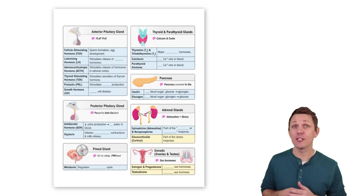
Review of Major Hormones

Negative Feedback Mechanism

A negative feedback mechanism is a control system that counteracts changes in a physiological variable to maintain homeostasis. In the context of hormone secretion, when a hormone reaches a certain level, it signals the endocrine system to reduce or stop its production. This process helps to stabilize hormone levels and prevent overproduction or underproduction, ensuring the body functions optimally.
Recommended video:
Guided course
03:26
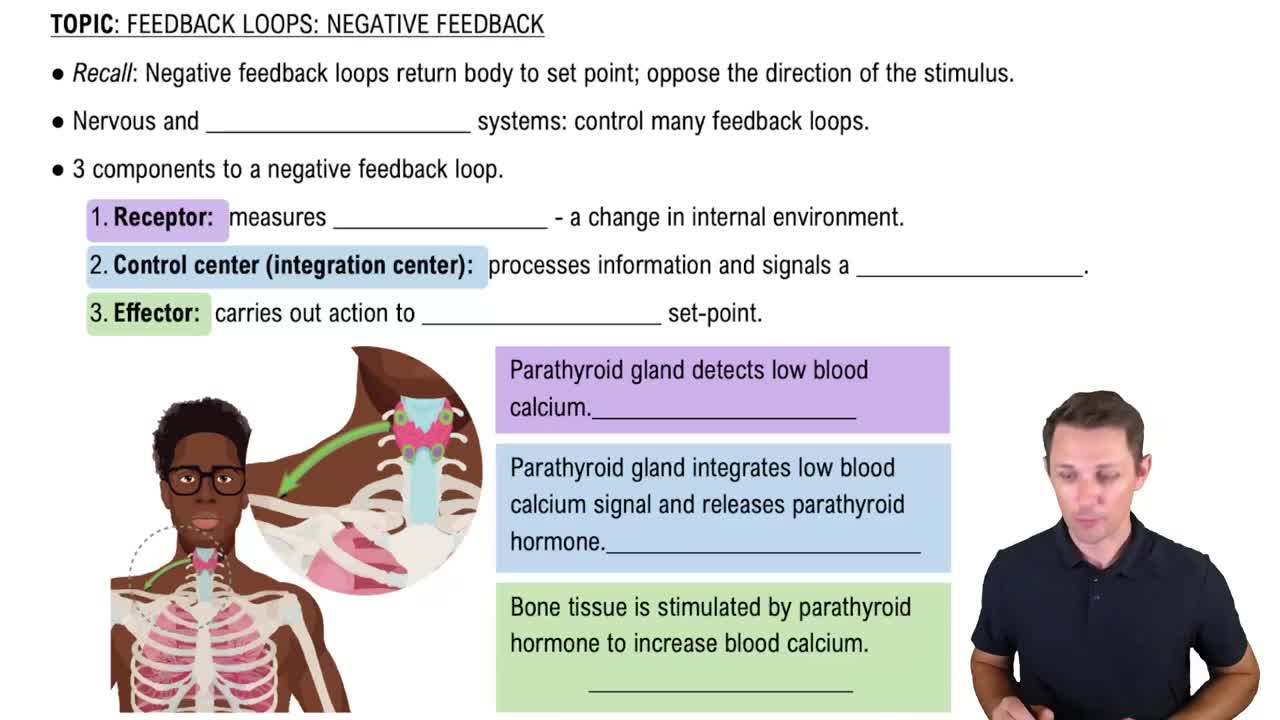
Negative Feedback Loops

Exceptions to Negative Feedback

While most hormones are regulated by negative feedback, some hormones operate through positive feedback mechanisms, where an increase in hormone levels leads to further secretion. An example is oxytocin during childbirth, where its release enhances uterine contractions. Understanding these exceptions is crucial for a comprehensive grasp of hormonal regulation and its complexities.
Recommended video:
Guided course
03:26
Negative Feedback Loops