Ch. 4 Histology
Amerman - Human Anatomy & Physiology 2nd Edition
Amerman2nd EditionHuman Anatomy & PhysiologyISBN: 9780136873822Not the one you use?Change textbook
Chapter 4, Problem 13c

Each of the following statements is false. Correct each to make a true statement.
Synoviocytes are the secretory cells of mucosae.

Verified step by step guidance
1
Understand the incorrect statement: Synoviocytes are not the secretory cells of mucosae. Synoviocytes are specialized cells found in the synovial membrane of joints, and their primary function is to secrete synovial fluid, which lubricates and nourishes the joint cartilage.
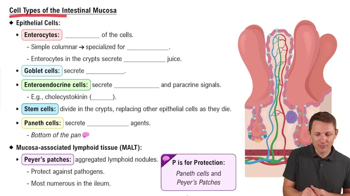
Identify the correct secretory cells of mucosae: The secretory cells of mucosae are typically goblet cells. Goblet cells are specialized epithelial cells found in mucosal linings, such as the respiratory and gastrointestinal tracts, and they secrete mucus to protect and lubricate these surfaces.
Reframe the statement to make it true: Replace 'Synoviocytes' with 'Goblet cells' and 'mucosae' with 'synovial membrane' to correctly describe the roles of these cells.
Verify the corrected statement: The corrected statement should read, 'Synoviocytes are the secretory cells of the synovial membrane,' and 'Goblet cells are the secretory cells of mucosae.'
Review the anatomical context: Ensure you understand the distinction between synovial membranes (associated with joints) and mucosae (associated with body cavities that open to the exterior, like the respiratory and digestive tracts). This will help clarify the roles of synoviocytes and goblet cells.

Verified video answer for a similar problem:

This video solution was recommended by our tutors as helpful for the problem above.
Was this helpful?

Key Concepts

Here are the essential concepts you must grasp in order to answer the question correctly.

Synoviocytes

Synoviocytes are specialized cells found in the synovial membrane of joints. They play a crucial role in producing synovial fluid, which lubricates and nourishes the cartilage and joint structures. Unlike mucosal secretory cells, which are involved in the secretion of mucus in mucosal tissues, synoviocytes are specifically associated with joint health and function.

Mucosae

Mucosae are the moist tissue layers that line various cavities and organs in the body, including the respiratory, digestive, and urogenital tracts. They are involved in secretion and absorption, with mucosal secretory cells producing mucus to protect and lubricate these surfaces. Understanding the distinction between mucosal tissues and synovial tissues is essential for correcting the false statement.
Recommended video:
Guided course
6:29
Cell Types of the Intestinal Mucosa

Secretory Cells

Secretory cells are specialized cells that produce and release substances such as enzymes, hormones, or mucus. In the context of mucosae, these cells are primarily responsible for mucus production, which serves protective and lubricative functions. Recognizing the different types of secretory cells and their specific roles in various tissues is vital for accurately correcting the statement about synoviocytes.
Recommended video:
05:33
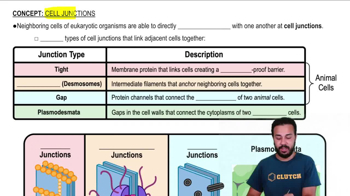
Cell Junctions