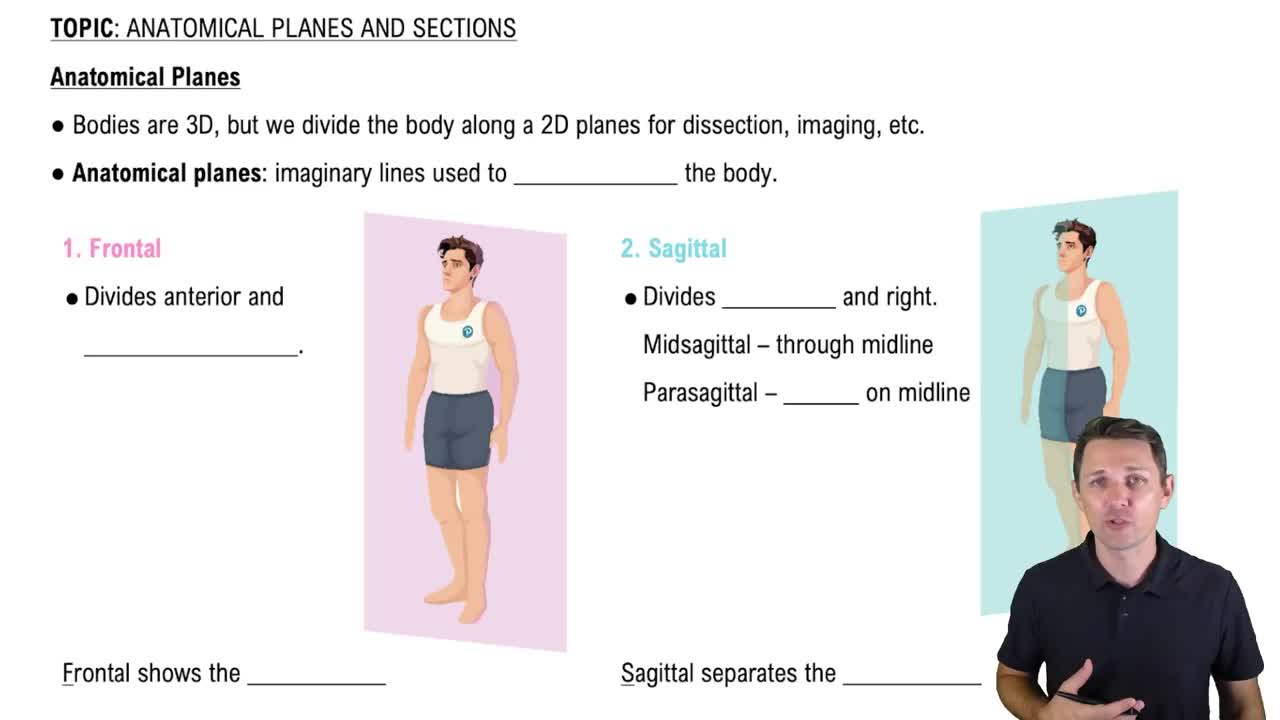
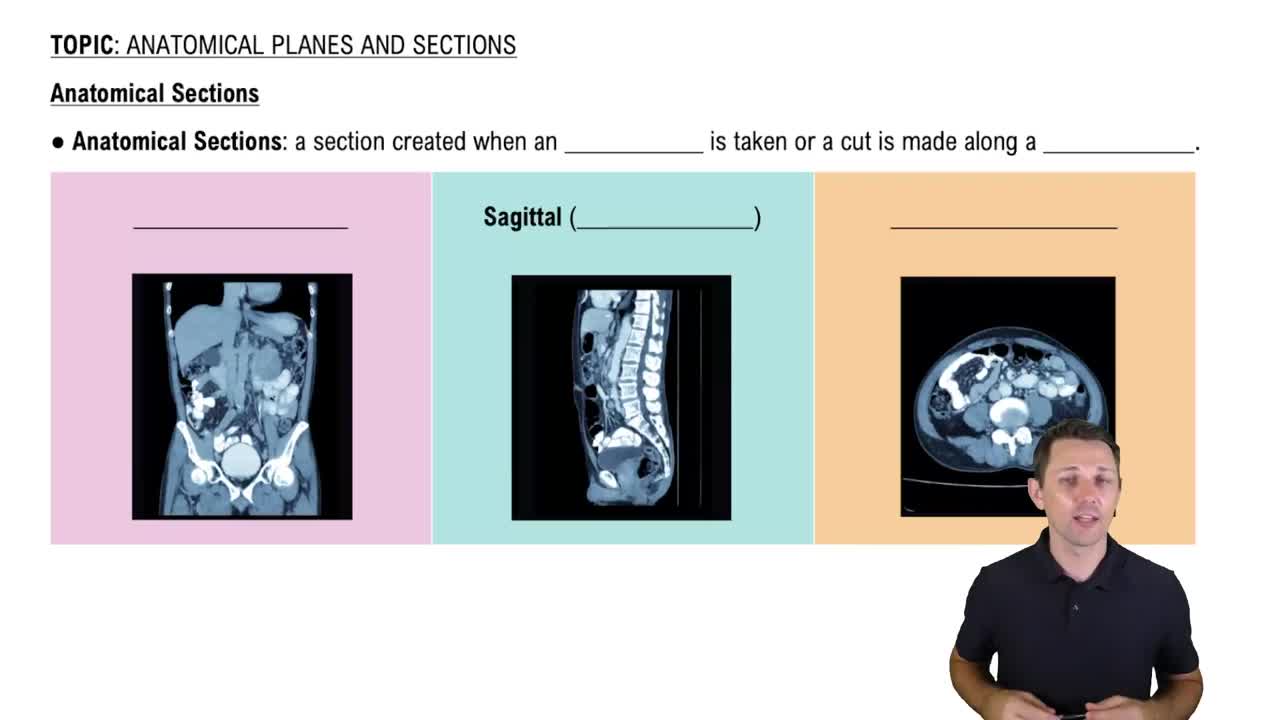
Define plane and section.

Elaine N. Marieb, Katja Hoehn 7th Edition
Ch. 1 The Human Body: An Orientation
Problem 15Assume that the body has been sectioned along three planes: (1) a median plane, (2) a frontal plane, and (3) a transverse plane made at the level of each of the organs listed below. Which organs would be visible in only one or two of these three cases?
a. Urinary bladder
b. Brain
c. Lungs
d. Kidneys
e. Small intestine
f. Heart
Verified step by step guidance
Verified video answer for a similar problem:
Key Concepts
Anatomical Planes of the Body
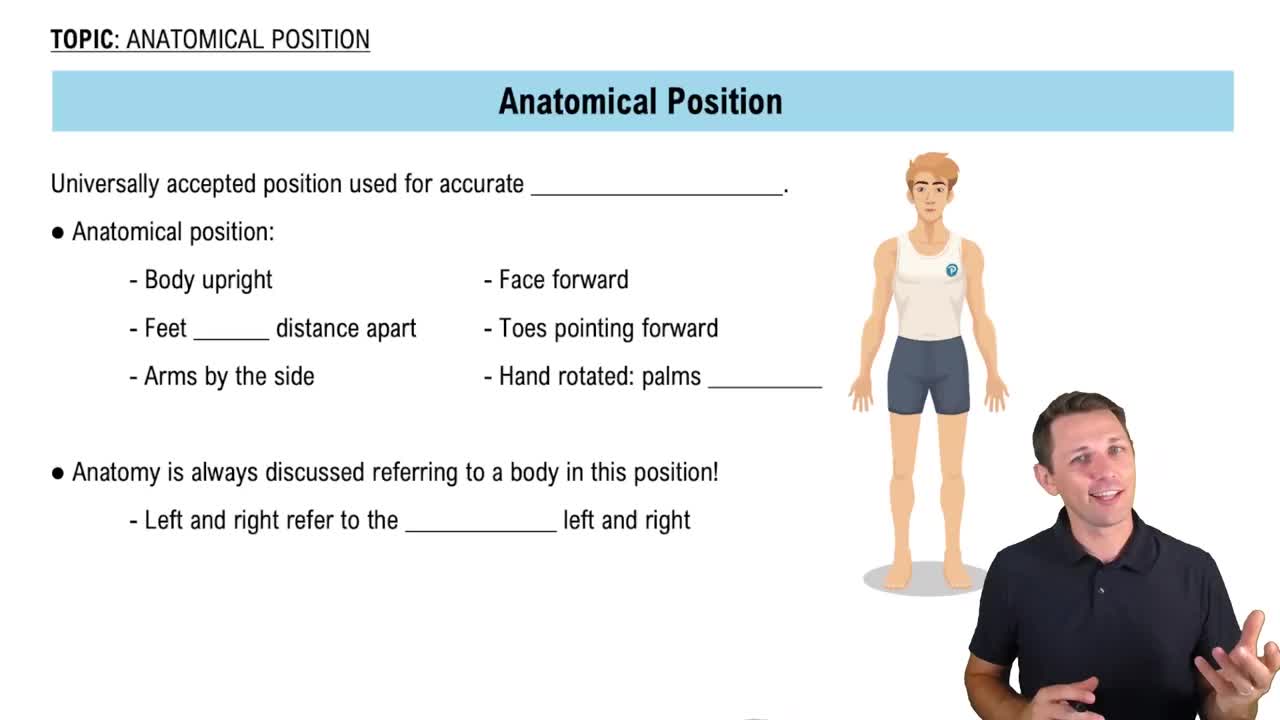
Organ Position and Symmetry
Cross-Sectional Anatomy and Organ Visibility
Provide the anatomical term that correctly names each of the following body regions:
a. Arm
b. Thigh
c. Chest
d. Fingers and toes
e. Anterior aspect of the knee
a. Make a diagram showing the nine abdominopelvic regions, and name each region. Name two organs (or parts of organs) that could be located in each of the named regions.
b. Make a similar sketch illustrating how the abdominopelvic cavity may be divided into quadrants, and name each quadrant.
Relate each of the following conditions or statements to either the dorsal body cavity or the ventral body cavity.
a. Surrounded by the bony skull and the vertebral column
b. Includes the thoracic and abdominopelvic cavities
c. Contains the brain and spinal cord
d. Contains the heart, lungs, and digestive organs
Which of the following relationships is incorrect?
a. Visceral peritoneum/outer surface of small intestine
b. Parietal pericardium/outer surface of heart
c. Parietal pleura/wall of thoracic cavity
Compare and contrast the operation of negative and positive feedback mechanisms in maintaining homeostasis. Provide two examples of variables controlled by negative feedback mechanisms and one example of a process regulated by a positive feedback mechanism.