Ch. 14 The Autonomic Nervous System
Marieb - Human Anatomy & Physiology 7th Edition
Elaine N. Marieb, Katja Hoehn7th EditionHuman Anatomy & PhysiologyISBN: 9780805359091Not the one you use?Change textbook
Chapter 14, Problem 11

Describe the meaning and importance of sympathetic tone and parasympathetic tone.

Verified step by step guidance
1
Step 1: Define 'sympathetic tone' as the baseline level of activity in the sympathetic nervous system, which maintains a steady state of partial constriction in blood vessels and readiness of organs to respond to stress or changes in the environment.
Step 2: Explain 'parasympathetic tone' as the continuous, low-level activity of the parasympathetic nervous system that helps maintain homeostasis by promoting restful functions such as digestion, energy conservation, and slowing the heart rate.
Step 3: Discuss the importance of sympathetic tone in regulating blood pressure and blood flow by controlling the degree of vasoconstriction, which ensures tissues receive adequate oxygen and nutrients under varying conditions.
Step 4: Highlight the role of parasympathetic tone in maintaining normal organ function during restful states, such as promoting digestion and reducing heart rate, which conserves energy and supports recovery.
Step 5: Emphasize the balance between sympathetic and parasympathetic tones as crucial for maintaining autonomic nervous system homeostasis, allowing the body to adapt efficiently to stress and relaxation demands.

Verified video answer for a similar problem:

This video solution was recommended by our tutors as helpful for the problem above.
Video duration:
2m
Was this helpful?

Key Concepts

Here are the essential concepts you must grasp in order to answer the question correctly.

Sympathetic Tone

Sympathetic tone refers to the baseline level of activity in the sympathetic nervous system, which controls the body's 'fight or flight' responses. It maintains functions like blood vessel constriction and heart rate regulation, ensuring readiness for stress or physical activity.
Recommended video:
5:03
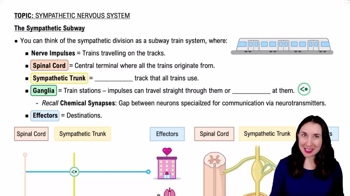
The Sympathetic Subway

Parasympathetic Tone

Parasympathetic tone is the ongoing activity of the parasympathetic nervous system, responsible for 'rest and digest' functions. It helps regulate processes such as slowing the heart rate, promoting digestion, and conserving energy during restful states.
Recommended video:
1:35
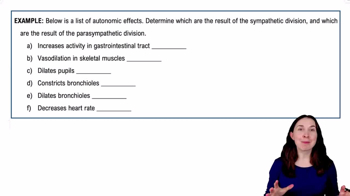
Parasympathetic Nervous System Example 1

Importance of Autonomic Tone Balance

The balance between sympathetic and parasympathetic tones is crucial for maintaining homeostasis. Proper autonomic tone ensures that the body can respond appropriately to stress while also recovering and conserving energy, supporting overall health and physiological stability.
Recommended video:
1:50
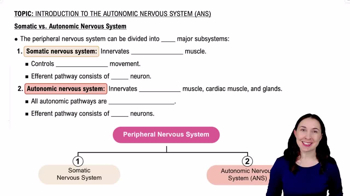
Somatic vs. Autonomic Nervous System