Pearson+ LogoPearson+ Logo
Ch. 15 - Is the Human Population Too Large?
Belk, Maier - Biology: Science for Life 6th Edition
Belk, Maier6th EditionBiology: Science for LifeISBN: 9780135214084Not the one you use?Change textbook
Chapter 15, Problem 1

Add labels to the figure that follows, which illustrates the predicted pattern of changes in human population growth rates when death rates fall.
Graph showing changes in human population growth rates as death rates decline over time.

Verified step by step guidance
1
Identify the two curves in the figure: The green curve represents the relative birth rates, while the blue curve represents the relative death rates over time.
Label the left side of the graph as 'High' and the right side as 'Low' to indicate the relative levels of birth and death rates.
Add a label to the shaded area between the curves, indicating 'Growth rate = Birth rate - Death rate,' as this represents the difference between the two rates.
Mark the transition phase with the label 'Demographic Transition,' which is the period where death rates fall significantly, followed by a gradual decline in birth rates.
Label the endpoints of the curves: At the beginning, both birth and death rates are high, and at the end, both rates are low, indicating stabilization of population growth.

Verified video answer for a similar problem:

This video solution was recommended by our tutors as helpful for the problem above.
Video duration:
2m
Was this helpful?

Key Concepts

Here are the essential concepts you must grasp in order to answer the question correctly.

Demographic Transition Model

The Demographic Transition Model (DTM) describes the transition of a society from high birth and death rates to low birth and death rates as it develops economically. This model typically includes four stages: pre-industrial, transitional, industrial, and post-industrial, illustrating how population growth rates change as a country progresses through these stages.
Recommended video:
Guided course
00:43
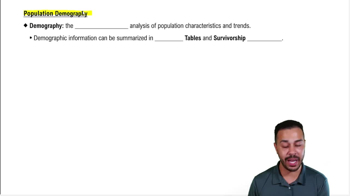
Population Demography

Population Growth Rate

Population growth rate is the rate at which the number of individuals in a population increases over a specific period. It is calculated by subtracting the death rate from the birth rate. A declining death rate, as shown in the graph, typically leads to a higher growth rate, especially during the transitional phase of demographic change.
Recommended video:
Guided course
03:26
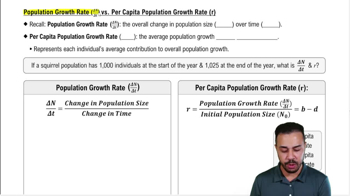
Population Growth Rate vs. Per Capita Population Growth Rate

Mortality Decline

Mortality decline refers to the reduction in death rates due to improvements in healthcare, nutrition, and sanitation. This decline is a key factor in the demographic transition, as it leads to a population surge when birth rates remain high while death rates fall, resulting in significant changes in population dynamics over time.
Recommended video:
Guided course
02:18
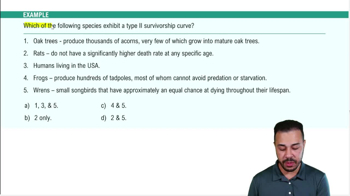
Population Demography Example 1