Pearson+ LogoPearson+ Logo
Ch. 22 - Applications of Genetic Engineering and Biotechnology
Klug - Concepts of Genetics  12th Edition
Klug12th EditionConcepts of Genetics ISBN: 9780135564776Not the one you use?Change textbook
Chapter 22, Problem 10

Does genetic analysis by ASO testing allow for detection of epigenetic changes that may contribute to a genetic disorder? Explain your answer.

Verified step by step guidance
1
Understand the concept of ASO (Allele-Specific Oligonucleotide) testing: ASO testing is a molecular technique used to detect specific DNA sequence variations, such as single nucleotide polymorphisms (SNPs) or small mutations, by using short, synthetic DNA probes that bind to the target sequence.
Recognize the scope of ASO testing: ASO testing is designed to identify genetic changes at the DNA sequence level. It is highly specific to the nucleotide sequence being tested and does not assess modifications beyond the DNA sequence itself.
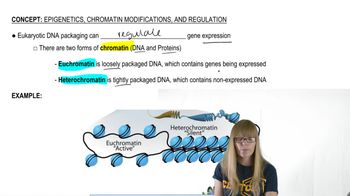
Define epigenetic changes: Epigenetic changes refer to modifications that affect gene expression without altering the underlying DNA sequence. Examples include DNA methylation, histone modifications, and non-coding RNA interactions.
Evaluate the limitations of ASO testing: Since ASO testing focuses solely on detecting specific DNA sequence variations, it cannot detect epigenetic changes such as DNA methylation or histone modifications, as these changes do not involve alterations in the nucleotide sequence.
Conclude the answer: Genetic analysis by ASO testing does not allow for the detection of epigenetic changes because these changes occur at a regulatory level and do not involve changes in the DNA sequence, which is the sole focus of ASO testing.

Verified video answer for a similar problem:

This video solution was recommended by our tutors as helpful for the problem above.
Video duration:
1m
Was this helpful?

Key Concepts

Here are the essential concepts you must grasp in order to answer the question correctly.

ASO Testing

Allele-Specific Oligonucleotide (ASO) testing is a molecular technique used to detect specific genetic mutations associated with diseases. It involves using short DNA sequences that are complementary to the target mutation, allowing for the identification of alleles in a sample. ASO testing is particularly useful for diagnosing single-gene disorders and can provide insights into the genetic basis of certain conditions.
Recommended video:
Guided course
02:48
Chi Square Analysis

Epigenetics

Epigenetics refers to the study of heritable changes in gene expression that do not involve alterations to the underlying DNA sequence. These changes can be influenced by environmental factors and can affect how genes are turned on or off. Common mechanisms of epigenetic regulation include DNA methylation and histone modification, which can play a significant role in the development of genetic disorders.
Recommended video:

Genetic Disorders

Genetic disorders are diseases caused by abnormalities in an individual's DNA, which can result from mutations, chromosomal abnormalities, or epigenetic changes. These disorders can be inherited or arise de novo and can affect various bodily functions. Understanding the genetic and epigenetic factors involved in these disorders is crucial for diagnosis, treatment, and potential gene therapy approaches.
Recommended video:
Guided course
03:45
Descriptive Genetics
Related Practice
Textbook Question

Which of the examples of genetic testing below are prognostic tests? Which are diagnostic?

DNA sequencing of a breast tumor reveals mutations in the BRCA1 gene.

667
views
Textbook Question

Which of the examples of genetic testing below are prognostic tests? Which are diagnostic?

Genetic testing in a healthy teenager identifies an SNP correlated with autism.

634
views
Textbook Question

Which of the examples of genetic testing below are prognostic tests? Which are diagnostic?

An adult diagnosed with Asperger syndrome (AS) has a genetic test that reveals an SNP in the GABRB3 gene that is significantly more common in people with AS than the general population.

700
views
Textbook Question

Maternal blood tests for three pregnant women revealed they would be having boys, yet subsequent ultrasound images showed all three were pregnant with girls. In each case Y chromosome sequences in each mother's blood originated from transplanted organs they had received from men! This demonstrates one dramatic example of a limitation of genetic analysis of maternal blood samples. What kind of information could have been collected from each mother in advance of these tests to better inform physicians prior to performing each test?

474
views
Textbook Question

What is the main purpose of genome-wide association studies (GWAS)? How can information from GWAS be used to inform scientists and physicians about genetic diseases?

1029
views
1
rank
Textbook Question

Describe how the team from the J. Craig Venter Institute created a synthetic genome. How did the team demonstrate that the genome converted the recipient strain of bacteria into a different strain?

545
views