
Textbook Question
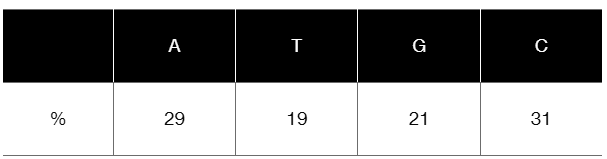
What evidence did Watson and Crick have at their disposal in 1953? What was their approach in arriving at the structure of DNA?
879
views

 Verified step by step guidance
 08:44
08:44
 09:32 09:32
What evidence did Watson and Crick have at their disposal in 1953? What was their approach in arriving at the structure of DNA?
How do covalent bonds differ from hydrogen bonds? Define base complementarity.
Draw the chemical structure of a dinucleotide composed of A and G. Opposite this structure, draw the dinucleotide composed of T and C in an antiparallel (or upside-down) fashion. Form the possible hydrogen bonds.
List three main differences between DNA and RNA.
Describe the various characteristics of the Watson–Crick double-helix model for DNA.
What are the three major types of RNA molecules? How is each related to the concept of information flow?