Pearson+ LogoPearson+ Logo
Ch. 23 - Developmental Genetics
Klug - Concepts of Genetics  12th Edition
Klug12th EditionConcepts of Genetics ISBN: 9780135564776Not the one you use?Change textbook
Chapter 23, Problem 6c

What aspects of development do maternal-effect genes control?

Verified step by step guidance
1
Maternal-effect genes are genes whose mRNA or protein products are deposited in the egg by the mother before fertilization. These products are crucial for early embryonic development.
These genes control the establishment of the body axes in the developing embryo, such as the anterior-posterior axis and the dorsal-ventral axis.
The mRNA or proteins encoded by maternal-effect genes are distributed asymmetrically in the egg, creating gradients that provide spatial information to the embryo.
These gradients influence the expression of zygotic genes, which further refine the developmental processes and establish specific body structures.
Examples of maternal-effect genes include *bicoid* and *nanos* in Drosophila, which are critical for anterior-posterior axis formation.

Verified video answer for a similar problem:

This video solution was recommended by our tutors as helpful for the problem above.
Video duration:
39s
Was this helpful?

Key Concepts

Here are the essential concepts you must grasp in order to answer the question correctly.

Maternal-Effect Genes

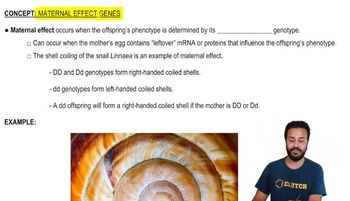
Maternal-effect genes are genes expressed in the mother that produce mRNA or proteins, which are then deposited into the oocyte (egg) during oogenesis. These maternal products influence the early development of the embryo, affecting processes such as cell division, axis formation, and the establishment of body plans.
Recommended video:
Guided course
03:38
Maternal Effect

Embryonic Development

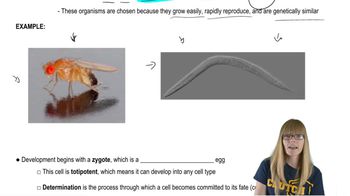
Embryonic development refers to the series of stages that an embryo undergoes from fertilization to the formation of a fully developed organism. Maternal-effect genes play a crucial role in this process by regulating the initial cellular environment and signaling pathways that guide the embryo's growth and differentiation.
Recommended video:
Guided course
08:30
Genetics of Development

Gene Regulation

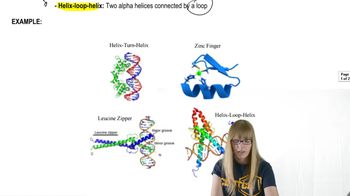
Gene regulation involves the mechanisms that control the expression of genes, determining when and how much of a gene product is made. In the context of maternal-effect genes, the regulation of these genes is vital for ensuring that the right proteins and RNAs are available at the correct stages of development, influencing the overall developmental trajectory of the embryo.
Recommended video:
Guided course
09:22
Review of Regulation