Pearson+ LogoPearson+ Logo
Ch. 19 - Genetic Analysis of Quantitative Traits
Sanders - Genetic Analysis: An Integrated Approach 3rd Edition
Sanders3rd EditionGenetic Analysis: An Integrated ApproachISBN: 9780135564172Not the one you use?Change textbook
Chapter 19, Problem 7c

Provide a definition and an example for each of the following terms:
Multifactorial inheritance

Verified step by step guidance
1
Understand the term 'multifactorial inheritance': This refers to a pattern of inheritance where a trait or disorder is determined by the combined effects of multiple genes (polygenic inheritance) and environmental factors. It is not solely controlled by a single gene.
Provide a clear definition: Multifactorial inheritance describes traits or conditions that result from the interaction of multiple genetic factors and environmental influences. These traits do not follow simple Mendelian inheritance patterns.
Explain the role of genes and environment: In multifactorial inheritance, genetic predisposition interacts with environmental factors such as diet, lifestyle, or exposure to certain chemicals, which collectively influence the expression of the trait.
Give an example: A common example of multifactorial inheritance is height. Height is influenced by multiple genes as well as environmental factors like nutrition during childhood.
Provide another example for clarity: Another example is Type 2 diabetes, which is influenced by genetic susceptibility and environmental factors such as diet, physical activity, and body weight.

Verified video answer for a similar problem:

This video solution was recommended by our tutors as helpful for the problem above.
Video duration:
2m
Was this helpful?

Key Concepts

Here are the essential concepts you must grasp in order to answer the question correctly.

Multifactorial Inheritance

Multifactorial inheritance refers to the genetic mechanism where multiple genes and environmental factors contribute to the development of a trait or disorder. Unlike single-gene traits, multifactorial traits do not follow simple Mendelian inheritance patterns. This means that the expression of these traits can vary widely among individuals, influenced by the interaction of various genetic and non-genetic factors.
Recommended video:
Guided course
05:13
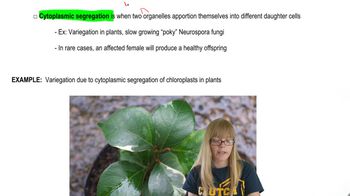
Organelle Inheritance

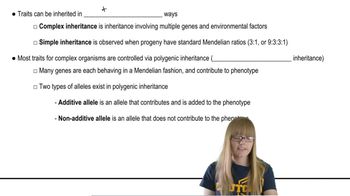
Polygenic Traits

Polygenic traits are characteristics that are controlled by two or more genes, often located on different chromosomes. These traits exhibit a continuous range of phenotypes, such as height or skin color, rather than discrete categories. The cumulative effect of multiple alleles from different genes results in the variation seen in the population, making polygenic traits a key aspect of multifactorial inheritance.
Recommended video:
Guided course
13:40
Traits and Variance

Environmental Influences

Environmental influences encompass all external factors that can affect the expression of genes and the development of traits. These can include lifestyle choices, nutrition, exposure to toxins, and other social or physical conditions. In the context of multifactorial inheritance, understanding how these environmental factors interact with genetic predispositions is crucial for comprehending the complexity of certain diseases and traits.
Recommended video:
Guided course
03:38
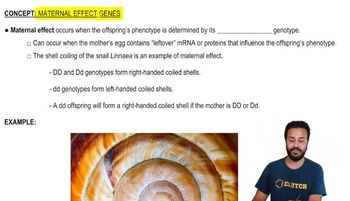
Maternal Effect