Pearson+ LogoPearson+ Logo
Ch. 2 - Transmission Genetics
Sanders - Genetic Analysis: An Integrated Approach 3rd Edition
Sanders3rd EditionGenetic Analysis: An Integrated ApproachISBN: 9780135564172Not the one you use?Change textbook
Chapter 2, Problem 1d

Compare and contrast the following terms:
Monohybrid cross and Test cross

Verified step by step guidance
1
Understand the definition of a monohybrid cross: A monohybrid cross involves the mating of two individuals with different alleles at one genetic locus of interest. It is used to study the inheritance of a single trait. For example, crossing a plant with genotype Pp (heterozygous) with another plant of genotype Pp.
Understand the definition of a test cross: A test cross is used to determine the genotype of an individual with a dominant phenotype. This is done by crossing the individual with a homozygous recessive organism. For example, crossing a plant with genotype P? (unknown dominant phenotype) with a plant of genotype pp (homozygous recessive).
Compare the purpose of the two crosses: A monohybrid cross is used to study the inheritance of a single trait and observe the resulting phenotypic ratios, while a test cross is specifically designed to reveal the genotype of an individual with a dominant phenotype.
Contrast the genetic setup: In a monohybrid cross, both parents can be heterozygous or have different alleles at the locus of interest. In a test cross, one parent is always homozygous recessive to ensure the dominant phenotype's genotype can be determined.
Summarize the key difference: A monohybrid cross focuses on inheritance patterns and ratios, while a test cross focuses on identifying unknown genotypes.

Verified video answer for a similar problem:

This video solution was recommended by our tutors as helpful for the problem above.
Video duration:
2m
Was this helpful?

Key Concepts

Here are the essential concepts you must grasp in order to answer the question correctly.

Monohybrid Cross

A monohybrid cross is a genetic cross between two individuals that differ in a single trait, typically involving one gene with two alleles. This type of cross helps to determine the inheritance pattern of that trait, illustrating the principles of dominance and segregation. For example, crossing a homozygous tall plant with a homozygous short plant will yield offspring that are all heterozygous for height.
Recommended video:
Guided course
10:20
Monohybrid Cross

Test Cross

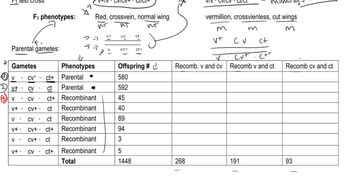
A test cross is a breeding experiment used to determine the genotype of an individual exhibiting a dominant phenotype. This is achieved by crossing the individual with a homozygous recessive individual for the trait in question. The phenotypic ratios of the offspring will reveal whether the dominant individual is homozygous or heterozygous, providing insight into its genetic makeup.
Recommended video:
Guided course
26:08
Trihybrid Cross

Genetic Inheritance

Genetic inheritance refers to the process by which genetic information is passed from parents to offspring through alleles. Understanding inheritance patterns, such as those observed in monohybrid and test crosses, is crucial for predicting traits in future generations. This concept is foundational in genetics, as it encompasses Mendel's laws of segregation and independent assortment, which govern how traits are inherited.
Recommended video:
Guided course
27:36
Diploid Genetics