Pearson+ LogoPearson+ Logo
Ch. 20 - Population Genetics and Evolution at the Population, Species, and Molecular Levels
Sanders - Genetic Analysis: An Integrated Approach 3rd Edition
Sanders3rd EditionGenetic Analysis: An Integrated ApproachISBN: 9780135564172Not the one you use?Change textbook
Chapter 20, Problem 1d

Compare and contrast the terms in each of the following pairs:
A polymorphic trait and a polymorphic gene

Verified step by step guidance
1
Understand the term 'polymorphic trait': A polymorphic trait refers to a characteristic or phenotype that exists in multiple forms within a population. For example, human blood types (A, B, AB, O) are polymorphic traits because they exhibit multiple distinct forms.
Understand the term 'polymorphic gene': A polymorphic gene is a gene that exists in multiple allelic forms within a population. This genetic variation is the basis for the expression of polymorphic traits. For example, the ABO blood group system is determined by a polymorphic gene with three alleles (IA, IB, and i).
Compare the two terms: Both polymorphic traits and polymorphic genes involve variation within a population. However, a polymorphic gene refers specifically to the genetic level (the presence of multiple alleles), while a polymorphic trait refers to the observable phenotypic variation that results from the expression of those alleles.
Contrast the two terms: A polymorphic gene is the underlying cause of genetic diversity, while a polymorphic trait is the outcome or manifestation of that diversity. For instance, the polymorphic gene for blood type leads to the polymorphic trait of different blood group phenotypes.
Summarize the relationship: Polymorphic traits are the phenotypic expressions of polymorphic genes. The genetic variation at the DNA level (polymorphic gene) translates into observable differences in traits (polymorphic trait) within a population.

Verified video answer for a similar problem:

This video solution was recommended by our tutors as helpful for the problem above.
Video duration:
1m
Was this helpful?

Key Concepts

Here are the essential concepts you must grasp in order to answer the question correctly.

Polymorphic Trait

A polymorphic trait refers to a characteristic in a population that exhibits two or more distinct forms or phenotypes. For example, human blood types (A, B, AB, O) are polymorphic traits, as they can vary among individuals. This variation is often influenced by genetic differences and can have implications for survival and reproduction.
Recommended video:
Guided course
13:40
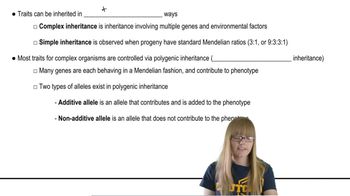
Traits and Variance

Polymorphic Gene

A polymorphic gene is a gene that exists in multiple allelic forms within a population. These variations can lead to different phenotypes, contributing to genetic diversity. For instance, the gene responsible for eye color has several alleles, resulting in various eye colors among individuals. Polymorphic genes are crucial for evolution and adaptation.
Recommended video:
Guided course
09:09
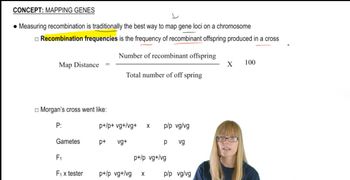
Mapping Genes

Contrast Between Trait and Gene

The key difference between a polymorphic trait and a polymorphic gene lies in their levels of biological organization. A polymorphic gene refers specifically to the genetic variation at the DNA level, while a polymorphic trait describes the observable characteristics that arise from these genetic differences. Understanding this distinction is essential for studying genetics and inheritance patterns.
Recommended video:
Guided course
13:40
Traits and Variance