Pearson+ LogoPearson+ Logo
Ch. 20 - Population Genetics and Evolution at the Population, Species, and Molecular Levels
Sanders - Genetic Analysis: An Integrated Approach 3rd Edition
Sanders3rd EditionGenetic Analysis: An Integrated ApproachISBN: 9780135564172Not the one you use?Change textbook
Chapter 20, Problem 34c

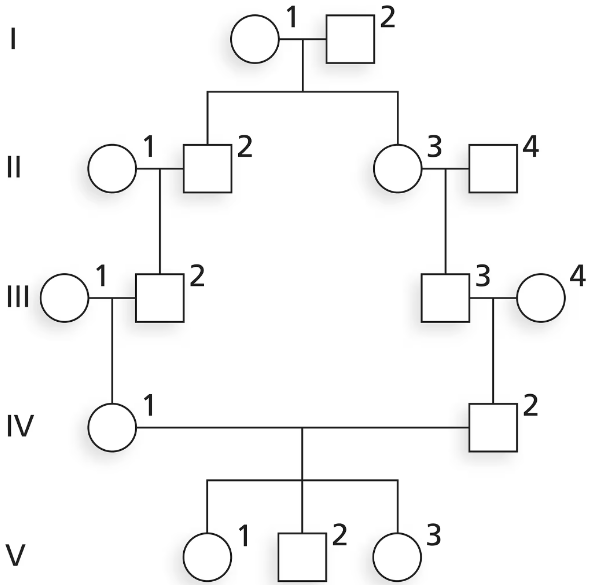
Evaluate the following pedigree, and answer the questions below. Calculate F for any inbred members of this family.

Verified step by step guidance
1
Step 1: Understand the concept of inbreeding coefficient (F). The inbreeding coefficient measures the probability that two alleles at a locus are identical by descent. It is calculated using the formula: F = piFa, where pi is the probability of a specific path and Fa is the inbreeding coefficient of the common ancestor.
Step 2: Identify the inbred members in the pedigree. Look for individuals whose parents are related (e.g., cousins, siblings, or other relatives). These individuals are likely to have an inbreeding coefficient greater than zero.
Step 3: Trace all possible paths through which alleles could be inherited from a common ancestor to the inbred individual. For each path, calculate the probability of inheritance using the rules of Mendelian genetics. For example, if the common ancestor is a grandparent, the probability of inheritance through one path is 14.
Step 4: Sum the probabilities of all paths leading to the inbred individual. Multiply this sum by the inbreeding coefficient of the common ancestor (if the ancestor is not inbred, their coefficient is 0). This gives the inbreeding coefficient for the individual.
Step 5: Repeat the calculation for each inbred member of the family. Ensure that you account for all possible paths and common ancestors for each individual.

Verified video answer for a similar problem:

This video solution was recommended by our tutors as helpful for the problem above.
Video duration:
2m
Was this helpful?

Key Concepts

Here are the essential concepts you must grasp in order to answer the question correctly.

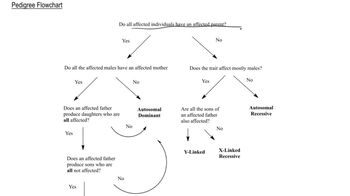
Pedigree Analysis

Pedigree analysis is a method used to study the inheritance patterns of traits in families. It involves creating a diagram that represents family relationships and the occurrence of specific genetic traits across generations. This visual representation helps identify whether traits are dominant, recessive, or linked to sex, which is crucial for understanding genetic inheritance.
Recommended video:
Guided course
01:59
Pedigree Flowchart

Inbreeding Coefficient (F)

The inbreeding coefficient (F) quantifies the probability that two alleles at a locus are identical by descent due to inbreeding. It ranges from 0 (no inbreeding) to 1 (complete inbreeding). Calculating F involves analyzing the pedigree to determine the degree of relatedness between individuals, which is essential for assessing the genetic health of a population.
Recommended video:
Guided course
08:52
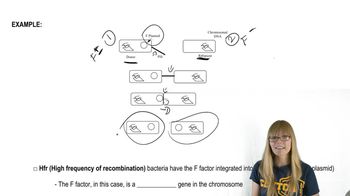
F Factor and Hfr

Genetic Relatedness

Genetic relatedness refers to the proportion of shared genetic material between individuals, often expressed as a percentage. In pedigree analysis, relatedness helps determine the likelihood of inheriting specific alleles from common ancestors. Understanding genetic relatedness is vital for calculating the inbreeding coefficient and evaluating the potential risks of inbreeding depression in a family.
Recommended video:
Guided course
03:45
Descriptive Genetics