Jefferson's Method: Videos & Practice Problems
Jefferson’s Method is an apportionment procedure used to distribute a fixed number of items fairly based on population. The process begins with the standard divisor, found by dividing total population by the number of items to apportion: \(D=\frac{P}{n}\) . This gives the initial size of one seat, volunteer, or representative unit.
Next, choose a modified divisor that is lower than the standard divisor, then compute each group’s modified quota by dividing its population by that modified divisor: \(q=\frac{p}{d}\) . In Jefferson’s Method, every quota is rounded down to its modified lower quota. If the rounded totals do not use all items, adjust the modified divisor and repeat until the sum of the rounded values matches the required total apportionment.
Jefferson's Method


Jefferson's Method Example 1
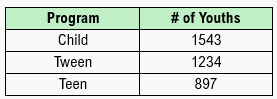
A city has a youth association with three programs for different age groups: Child (0-6), Tween (7-12), and Teen (13-18). They want to apportion the 30 new volunteers fairly based on the number of youths served by each of these programs. Use Jefferson’s Method to get a fair apportionment.
Child - 13; Tween - 10; Teen - 7
Child - 12; Tween - 10; Teen - 7
Child - 12; Tween - 11; Teen - 7
Child - 12; Tween - 10; Teen - 8
Here's what students ask on this topic:
Jefferson's Method is an apportionment procedure used to fairly distribute a fixed number of items, such as seats or representatives, based on population sizes. The process starts by calculating the standard divisor, which is the total population divided by the number of items to apportion, represented as . This divisor represents the ideal population size per item. Then, a modified divisor lower than the standard divisor is chosen. Each group's modified quota is calculated by dividing its population by this modified divisor: . Jefferson's Method rounds down each quota to the nearest whole number (lower quota). If the sum of these rounded quotas does not equal the total number of items, the modified divisor is adjusted and the process repeats until the sum matches the required total. This method ensures a fair and proportional distribution based on population.
In Jefferson's Method, the standard divisor is the first step to determine the size of one unit (such as a seat or representative) based on the total population and the number of items to be apportioned. It is calculated by dividing the total population () by the total number of items (). The formula is: . This divisor represents the average population per item and serves as a baseline for further calculations in the apportionment process.
Jefferson's Method uses a modified divisor lower than the standard divisor to ensure that when quotas are rounded down, the total number of allocated items matches the fixed number to be apportioned. Since rounding down quotas can reduce the total sum, lowering the divisor increases each group's quota before rounding, compensating for the loss caused by rounding down. This adjustment is repeated by changing the modified divisor until the sum of the rounded quotas equals the total number of items. This approach helps maintain proportionality while ensuring the total allocation is correct.
In Jefferson's Method, the standard quota is the population of a group divided by the standard divisor, which is the total population divided by the total number of items. The modified quota, however, is calculated by dividing the population by a modified divisor that is lower than the standard divisor. The standard quota is a theoretical ideal, while the modified quota is adjusted to account for rounding down. The modified quota is then rounded down to the nearest whole number to determine the number of items allocated to each group. This adjustment ensures the total allocation matches the fixed number of items.
Jefferson's Method ensures the total number of items apportioned matches the required total by iteratively adjusting the modified divisor. Initially, the standard divisor is calculated, and then a lower modified divisor is chosen. Each group's population is divided by this modified divisor to get the modified quotas, which are rounded down. If the sum of these rounded quotas is less than the total number of items to apportion, the modified divisor is decreased further to increase quotas. This process repeats until the sum of the rounded quotas exactly equals the total number of items, ensuring a fair and precise apportionment.